
Electric radiant floor heating cost, stated plainly for 2026: materials run $8 to $17 per square foot, and the installed heating scope, product, labour, thermostat and electrician, lands at $15 to $30 per heated square foot in Canada. A bathroom is a few hundred in materials and a known quantity (priced kit by kit in our heated bathroom floor guide); this guide prices the wider question, kitchens, living areas, additions and the whole-home version, including the running costs and the two situations where electric radiant is the wrong buy.

Cost by Scope
| Scope | Heated area | Installed heating scope (2026) |
|---|---|---|
| Bathroom / ensuite | 30 to 100 sq ft | $1,400 to 2,250 (see bathroom guide) |
| Kitchen | 80 to 150 sq ft | $2,200 to 4,200 |
| Living / family room | 200 to 350 sq ft | $4,500 to 9,000 |
| Basement recreation zone | 300 to 500 sq ft | $6,000 to 12,000 |
| Whole main floor, zoned | 800 to 1,200 sq ft | $15,000 to 28,000 |
Two things shape every row: heated area is the walked floor, not the room (cabinets, islands, sofas’ footprints and clearances come out), and each zone carries its own thermostat and circuit, the fixed $500 to 900 of controls and electrical that make small zones pricey per foot and large ones efficient.
The Three Product Families
- Loose cable in an uncoupling membrane: the tile-world standard; exact-fit routing, the membrane serves the tile too; mid-range material cost.
- Pre-spaced mats: fastest in rectangles, slightly higher material cost, awkward in cut-up rooms where mat surgery eats the saving.
- Heating film / foil systems: thin products for under laminate and engineered floating floors; lower output (comfort heat, not room heat), the only family that serves floors that cannot be tiled or levelled.
Running Costs: Zoned Truth vs Whole-Home Truth
At full call, electric radiant draws about 12 to 15 watts per square foot, and then the honesty splits by use. As comfort heat in scheduled zones (bathroom mornings, kitchen evenings), the duty cycle is short and monthly bills land in the $10 to 40 range most households shrug at. As a home’s primary heat, resistance electricity at Ontario rates costs more per unit of warmth than a heat pump delivers (a heat pump moves two to three units of heat per unit of electricity) and more than gas where gas exists. Radiant’s counter-argument is zoning and comfort at low air temperatures, not raw efficiency. The physics conclusion most installers will say out loud: electric radiant as targeted comfort is a bargain; as whole-home primary heat it is a luxury choice, except in small, well-insulated homes and ductless additions where the alternatives price worse.
Electric vs Hydronic at Scale
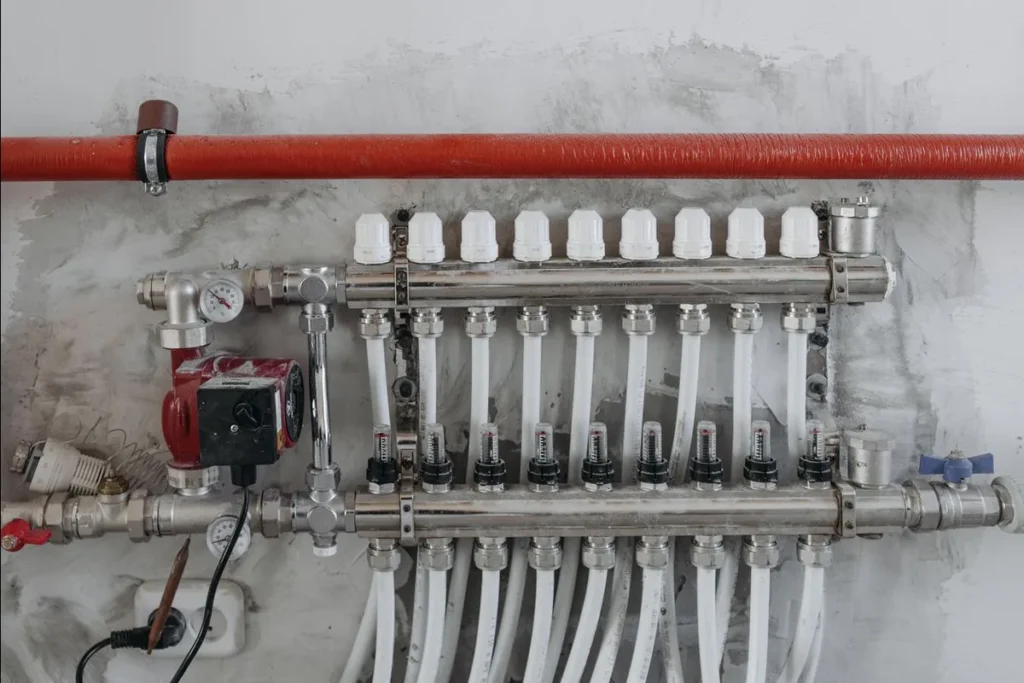
Water radiant installs at roughly $15 to 25 per square foot plus the plant to heat the water, and its running cost rides the boiler or heat pump behind it. Cross-over logic: one or two rooms, electric, always. A whole new home designed around radiant, or a house already carrying a boiler with capacity, hydronic earns its complexity. Between those poles, additions and renovated main floors usually land electric for the zoning and the absence of a plant room, which is a decision about the house, not about the technologies’ brochures. Feasibility of the under-tile version specifically, build-ups, heights, subfloors, is its own guide: heated floors under tile.
The Electrical Conversation
- Every zone: dedicated circuit, GFCI protection (built into proper thermostats), licensed connection, Ontario ESA territory, non-negotiable.
- Load math: 1,000 heated square feet at full simultaneous call is 12 to 15 kW, a serious line on a 100-amp panel. Zoning, staggered schedules and (in whole-home designs) a panel conversation come before the purchase, not after.
- 240-volt systems halve the amperage per foot versus 120-volt, the standard choice beyond bathroom scale.
Where the Money Goes on a Typical Room
- Heating product (cable/mat/membrane): 35 to 45 percent of the scope, scales with area.
- Thermostat and sensors: a fixed $250 to 450 per zone, already counted inside product quotes from the good suppliers.
- Electrician: $200 to 500 per zone for circuit and connection; more when the panel needs work.
- Installation labour: the routing, testing and documentation, inside a tile job it is the marginal hours the tile cost calculator never sees, quoted separately by honest installers.
- Floor build-up extras where they apply: insulation boards over cold slabs (which pay for themselves in response time), self-leveller over film/mats in some systems.
Comparing Quotes Without Getting Played
Radiant quotes hide scope in three standard places: the thermostat (missing, or a $40 dial where a programmable was promised), the electrician (“by others,” discovered at connection time), and the heated area (the room’s full footprint priced where fixtures should have come out, flattering the per-foot rate while inflating the total). A comparable quote names the product family, states the heated square footage, includes the thermostat model, and carries the electrical as a line. With those four things visible, two quotes can be judged in a minute; without them, the cheaper number is usually just the emptier one. Homeowners mid-renovation can cross-check the tile portion against our tile installer rates guide.
Watch: Electric Radiant Costs Explained
Costs land differently on camera than on a spreadsheet. This video from Momentous Living, “How Much Does Electric Floor Heat REALLY Cost?!”, walks through what electric floor heat really costs.
Radiant Floors Across Niagara Homes
BGM Construction installs electric radiant under tile across the region, single rooms inside renovations and zoned main floors in larger projects. BGM Construction, 5 Swart Ln, Thorold, ON L2V 0G5. Open Monday to Saturday: 8:00 AM to 5:00 PM. Call +1 365-524-1898 for a free quote.
The team works across Thorold, Niagara Falls, St. Catharines and Welland.
Price Your Rooms
Call +1 365-524-1898 or use the contact page with room dimensions and floor type. The zone plan and its honest running-cost estimate come back itemised.
More Heated Floor Guides
The guides below compare the systems, running costs and honest trade offs behind the prices in this guide.
- DITRA-HEAT vs Traditional Electric Floor Heat: Which System Belongs Under Your Tile?
- Heated Tile Floor Pros and Cons: The Honest Count Before You Commit
- How Much Electricity Does a Heated Floor Use? The Running Cost Math, Worked Out
- Hydronic vs Electric Radiant Floor Heating: Which Fits a Canadian Home?
- Best Thermostat for Heated Tile Floor: How to Choose the Right Control in Canada
Frequently Asked Questions
Can electric radiant heat a whole house?
Technically yes, economically rarely the first choice at Ontario electricity rates versus a heat pump, except small, tight, well-insulated homes and additions without ductwork, where it can be the cheapest total system. Comfort and zoning are superb everywhere; the running-cost arithmetic is the decider, and any honest quote shows it.
How does it compare with baseboard heaters?
Same electricity, better delivery: baseboards scorch one wall’s air and leave the floor cold; radiant warms the surface people touch, runs at lower air temperatures for the same comfort, and frees the walls. Installed cost is higher, baseboards are nearly free to install, so the comparison is capital versus comfort, with running costs close.
Does every room need its own thermostat?
Every zone does, and zones should follow use patterns: bathrooms together if their schedules match, living areas separate from bedrooms. Thermostats are a few hundred dollars each, and zoning is where the running-cost savings live. Merging unlike rooms onto one control throws the savings away to save a thermostat.
Will my 100-amp panel handle it?
A bathroom or two, comfortably. Whole-floor systems need the load calculation done properly. Staggered zone scheduling often keeps a 100-amp service legal and adequate, but a panel upgrade belongs in the budget conversation for large installs, priced by the electrician before the cable is ordered.
What is the lifespan, and what does a failure cost?
Cables carry warranties up to 25 years and are life-of-floor in practice; there is nothing to service. The realistic failure point is a thermostat (a wall swap). A cable fault, genuinely rare, is found with locating equipment and repaired through a few tiles, not a floor replacement, which is the fear worth retiring with facts.
Is heating film under laminate worth it?
As comfort heat in a bedroom or nursery over a floating floor, yes, it takes the chill off bare feet for modest money. As room heating, its output is too low; buy it for the feeling, not the furnace replacement, and it will not disappoint.









3 Responses