
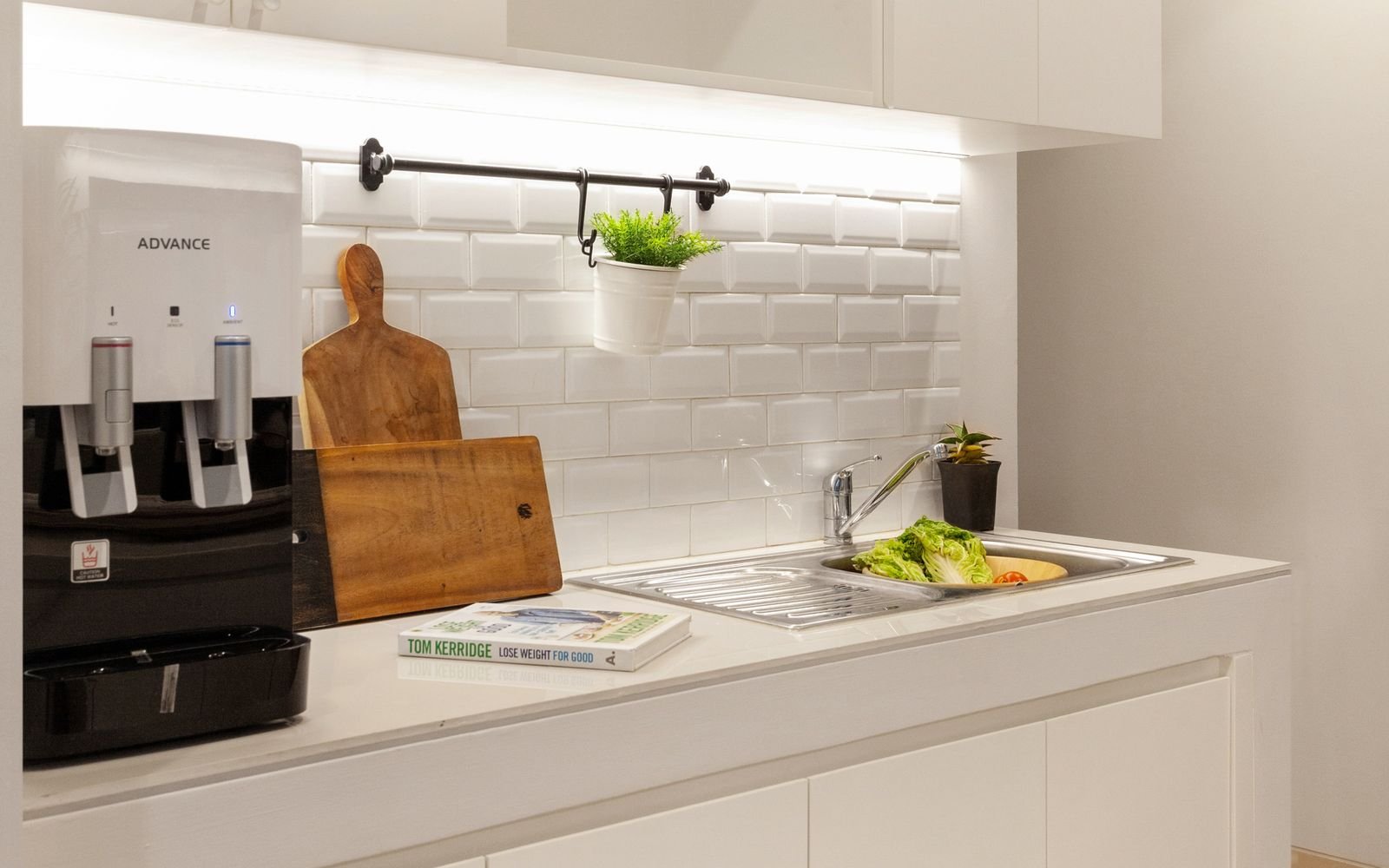
The short answer to what color grout to use with white tile: match the grout to the job the room has to do. White grout blends into white tile and gives one unbroken surface. Light gray defines each tile softly and hides everyday grime better than any other color. Charcoal and black grout draw the tile pattern in bold lines. Beige and warm gray grout add warmth beside wood and stone. For white tile floors, medium gray is the most practical choice our installers make.
Homeowners ask our team about what color grout to use with white tile on nearly every bathroom and kitchen job we quote in the Niagara Region. The question sounds small, and it decides how the whole room reads. Grout is not a thin frame around the tile. On small subway tile and mosaics, the joints cover a large share of the wall, and their color becomes half the design. The same white tile can look calm, crisp or busy depending on the grout beside it.
This guide walks through each grout color honestly: how it looks on day one, how it looks after a year of showers and cooking, and where it belongs. BGM Construction installs white tile across Thorold, St. Catharines and Niagara Falls every week, and the advice below comes from those jobs, including the ones where a homeowner changed their mind after seeing a sample board.
How Grout Color Changes the Look of White Tile
Grout color works in three ways. A grout that matches the tile blends. The surface reads as one sheet, the room feels bigger, and the eye rests on fixtures and light instead of a grid. A grout a few shades darker defines. Each tile keeps its shape, the layout pattern shows, and the wall gains quiet structure. A grout far darker than the tile contrasts. The joints become the pattern, and the tile shape, brick offset, herringbone or hexagon, turns into the main feature of the room.
Tile size controls how strong each effect feels. Large format tiles have few joints, so even a bold grout color stays a minor note. Small tiles multiply the joints. A black grout that looks sharp on a big subway tile can turn a tiny mosaic floor into a busy checkerboard. Joint width matters too. Wide joints show more grout color than tight ones, so a shade that looks gentle on a sample stick can look stronger across a full wall.
Undertone is the quiet detail that decides whether a combination feels right. White tiles lean cool, warm or neutral. A cool gray grout beside a warm, creamy tile can look blue and dirty even when both are clean. Hold the grout sample against the actual tile, in the room, before you judge it.
White Grout With White Tile
White on white is the blended look at its purest. The wall reads as one bright surface, small bathrooms feel larger, and the tile layout fades into the background. This is the right call for a calm, minimal room, and for tiles with a beautiful glaze or handmade edge that deserves the attention.
Now the honest upkeep report. White grout shows everything: soap scum in a shower, cooking splashes behind a stove, grey traffic film on a floor. It needs sealing, and it needs the steady light cleaning we describe in our guide to how to clean shower tiles. In a busy family shower, white grout stays white only for the household that wipes the walls down often.
One trap catches many people. Pure white grout beside an off-white or creamy tile makes the tile itself look yellowed and unwashed, because the grout is brighter than the tile. If your white tile leans warm, choose a warm white or pale greige grout that sits closer to the tile. And in an all-white kitchen, with white cabinets and white counters, white grout can wash the whole room out. A light gray gives that room the definition it needs.
Gray Grout: The Practical Middle
Gray is the grout color our installers recommend most, because it splits the difference between looks and upkeep. Light gray defines white subway tile softly, the way pencil lines define a drawing. The pattern shows, the room stays bright, and the joints forgive the grey film that daily life leaves behind. Medium gray hides more again, and on floors it is the most practical answer to what color grout with white tile that a household can choose. Foot traffic, pet paws and winter grit from Niagara driveways all fade into it.
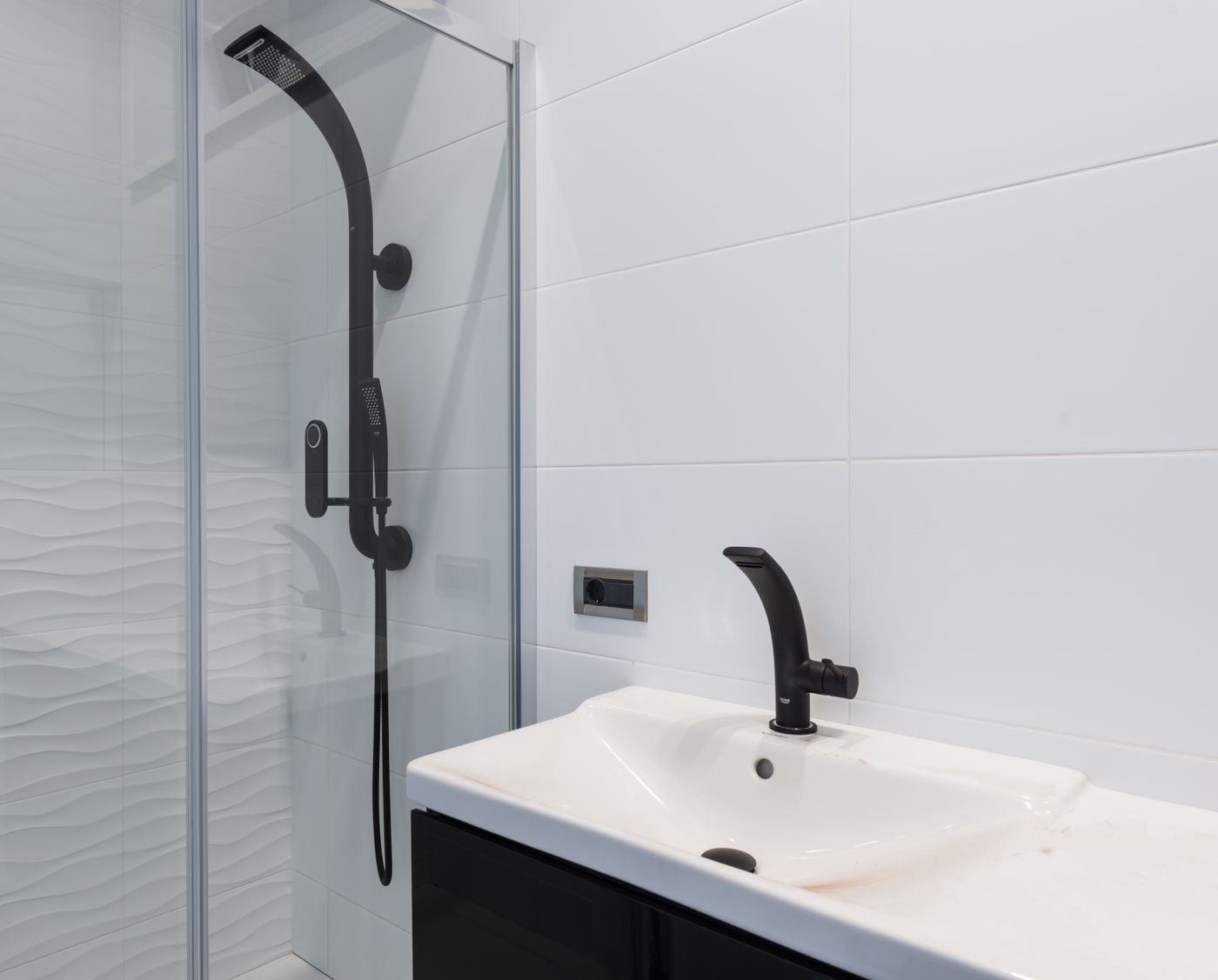
Choose the gray family by undertone. Warm grays, often sold as greige or taupe gray, sit well with warm white tile, wood vanities and brushed brass. Cool grays suit cool white tile, chrome and black fixtures. A mismatch here is the most common reason a finished job looks slightly wrong to its owner without them knowing why.
Gray also behaves kindly as it ages. White grout darkens unevenly with use, and black grout lightens with soap film and mineral haze. Gray starts in the middle, so a year of normal life moves its appearance the least.
Black and Charcoal Grout
Dark grout turns white tile into a drawing of itself. The brick pattern of a subway backsplash, the geometry of a hexagon floor, the weave of a basketweave mosaic: dark joints display all of it. The look suits industrial, vintage and high-contrast rooms, and it photographs beautifully.
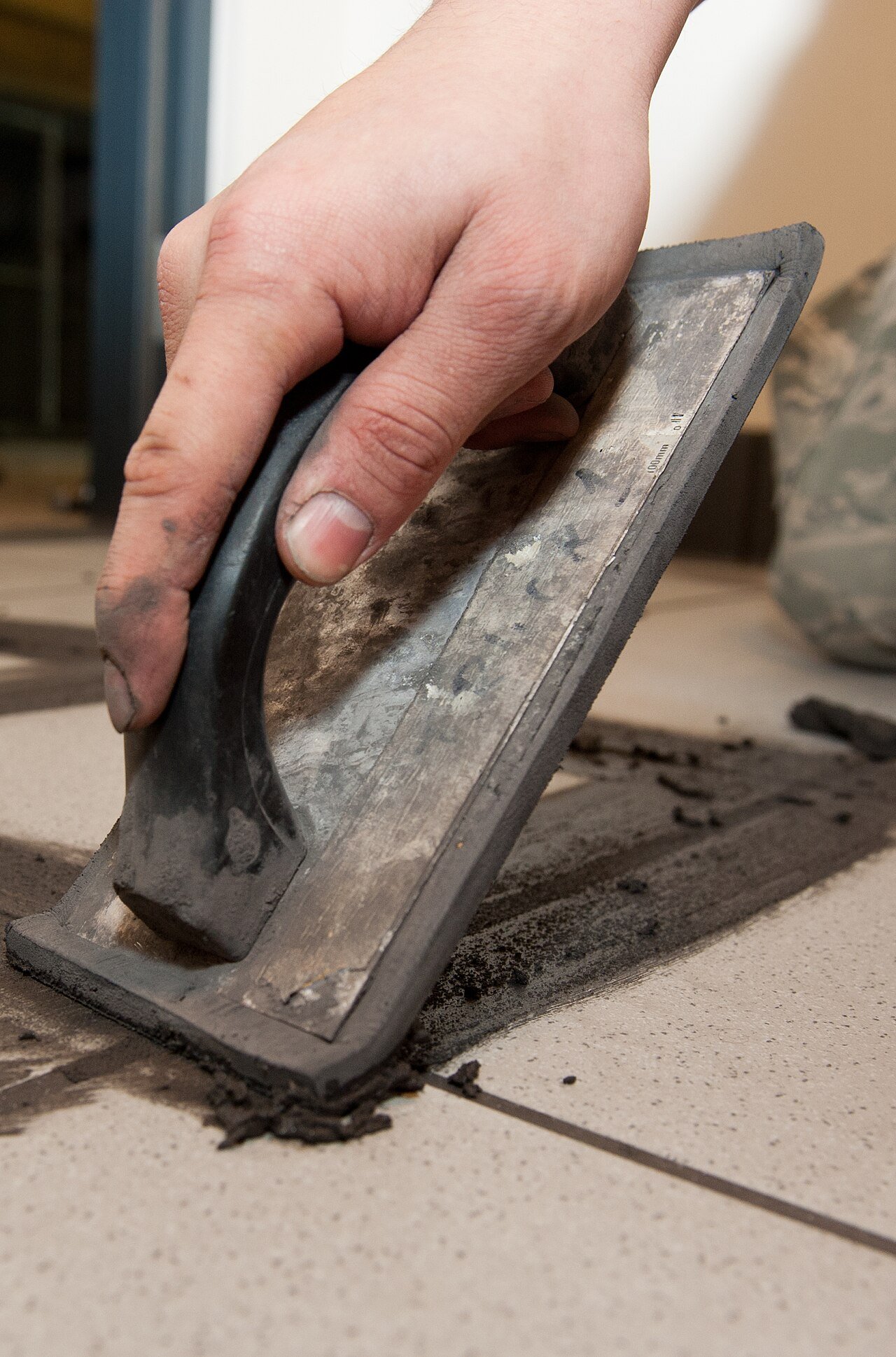
Respect two cautions before you choose it. Dark grout in a small bathroom can chop the tile into a tight grid and make the room feel smaller and busier, so test it carefully in tight spaces. And dark grout is an honest mirror of the tile work under it. Every uneven joint and every lip between tiles shows against the contrast. A skilled installer welcomes that. Sloppy setting work cannot hide from it.
Upkeep surprises people in the opposite direction from white grout. Dark grout hides brown and grey dirt well, but it shows pale deposits clearly: soap film, hard water haze and the white mineral bloom called efflorescence all stand out on black joints. In a hard water shower, charcoal often looks cleaner after a year than true black, because the softer tone hides that haze better.
Beige and Warm Grout Colors
Beige, tan and warm greige grout give white tile a softer contrast than gray and a warmer one than white. They suit rooms built around wood, natural stone and warm metals: a white tiled shower beside a walnut vanity, a kitchen backsplash over a wood counter, a farmhouse floor. The joints stay visible enough to show the pattern, and the room avoids the cold edge that pure white and gray can carry.
Warm grout also pairs honestly with the creamy and handmade-look tiles that many homeowners choose now. Those tiles rarely match a stark white grout, and a warm neutral grout lets them look deliberate instead of mismatched.
Colored grout, in blues, greens or deeper tones, sits at the far end of the range. It can turn a small backsplash or a powder room wall into the feature of the house. Treat it as a commitment: trends move on, regrouting is real work, and a strong color limits how you can restyle the room later. Our advice is to keep bold colors in small areas you can afford to redo.
What Color Grout to Use With White Tile, Room by Room
Showers and Bathroom Walls
Wet areas punish pale grout. Soap, shampoo and minerals work on the joints daily, and white grout in a shower needs sealing and regular care to stay bright. Light to medium gray is the low-fuss choice for most family showers, and charcoal suits a deliberate high-contrast design. For any light color in a shower, ask your installer about epoxy grout. It resists stains far better than standard cement grout, and it holds its color in standing water areas like shower floors and niches. Our shower tile installation team quotes it often for exactly this reason.
Bathroom and Entry Floors
Floors collect grit, and the joints collect it first. Medium gray earns its reputation here: it hides the grey-brown film of foot traffic, it flatters white and marble-look porcelain, and it does not demand weekly scrubbing. White grout on a floor is the highest-maintenance choice on this page. Black grout on a floor shows dust and pale grit clearly, so it suits low-traffic powder rooms better than busy entries.
Kitchen Backsplashes
A backsplash takes cooking splashes but no standing water and no foot traffic, so it forgives more than a shower or floor. White grout can live happily here in a calmer kitchen, especially with a good sealer. Light gray remains the safe classic with white subway tile. A backsplash is also the one place where a bolder grout color costs little to change later, because the area is small and dry. Homeowners planning a full tile installation often test their bold idea here first.
Test the Color Before You Commit
Never choose grout color from the small printed chart alone. Grout dries lighter than it looks in the bucket and lighter than the wet sample on a color stick, and room light shifts it again. The only test our installers trust is a sample board: a few pieces of the actual tile, grouted with the actual grout, left to cure fully for at least two to three days, then stood in the room where it will live. Check it in morning light and under the room’s own bulbs at night.
Watch the water during installation too. Consistent mixing matters, because too much water in the mix or in the cleanup sponges washes pigment out unevenly and leaves one wall in two shades. This is a quiet skill difference between installers, and it shows most on mid-tone gray grout, where patchiness has nowhere to hide.
If two colors still compete after the board test, choose by upkeep, not by the first-day photo. You will live with the cleaning routine for years. The shade that forgives your household’s habits is the right shade.
How to Change Grout Color on Tile You Already Have
Plenty of homeowners search for how to change grout color on tile after a finished job disappoints them, or after years of wear leave the joints darker than the tile. Two routes exist, and they differ in how long they last.
Grout colorant is the lighter route. These epoxy-based coatings paint the joint a new color and seal it in the same step. The grout must be cleaned deeply first, because colorant sticks to the surface of the joint, not to dirt. Colorant works well on wall tile and backsplashes and can move a grout a few shades in either direction. Treat it as a coating, not a cure: in shower floors and other heavy scrub areas it wears over time and needs renewal.
Regrouting is the permanent route. The installer cuts the old grout out of the joints and packs in new grout at the color you choose. It costs more in labor, and it is the right answer when the old grout is cracked, crumbling or stained deep below the surface. A color change is also the honest moment to fix failed joints instead of covering them. If your grout is damaged rather than merely the wrong color, talk to a bathroom tile contractor before you spend money on coatings.
Keeping Light Grout Looking Light
Light grout stays light with three habits. Seal cement-based grout after it cures, and renew the sealer on the schedule the product states, because the sealer is what stands between the joint and the stain. Clean with mild, pH-neutral products and a soft brush, since harsh acids and bleach break grout down and roughen its surface, and rough grout grabs dirt faster. Dry shower walls with a quick squeegee pass so minerals never settle into the joints.
When light grout in a shower already looks tired, a proper deep clean often restores more color than homeowners expect. Our guide on how to clean shower tiles covers the methods material by material, including the peroxide paste that lifts stains out of grout lines.
Frequently Asked Questions
What color grout to use with white tile?
The best color depends on the look you want and the cleaning you will honestly do. Choose white grout for a blended, unbroken surface in a low-splash area. Choose light gray for soft definition and the easiest upkeep on walls, and medium gray for floors. Choose charcoal or black when the tile pattern itself should be the feature. Choose beige or warm greige beside wood, stone and warm metals. Whatever the room, test the finalists on a grouted sample board and judge them fully dry, in the room’s own light.
What color grout with white tile in a shower?
In a shower, light to medium gray is the practical answer for most households. It hides soap film and mineral haze better than white, and it avoids the pale deposits that show on black joints. If your design calls for a pale grout in the shower, ask for epoxy grout, which resists staining far better than cement grout, and keep up a simple routine of rinsing and squeegeeing the walls. White grout in a daily family shower stays bright only with sealing and steady care.
Does white grout turn yellow or dirty quickly?
White grout does not usually turn yellow by itself. It picks up color from its surroundings: soap and shampoo residue in showers, cooking grease near stoves, rust-tinted water, and the grey film of foot traffic on floors. Because the joint starts at bright white, every deposit shows. Sealing slows the process down, and mild regular cleaning lifts most of it back out. Grout that stays stained after a proper deep clean has usually absorbed the stain below the surface, and regrouting a few joints restores it.
Can you change grout color without removing the tiles?
Yes. Grout colorant coats the existing joints a new color and seals them in one step, and it works well on walls and backsplashes after a deep clean. It is a coating, so it wears over time in shower floors and other scrubbed areas. The permanent option is regrouting: cutting the old grout out and packing new grout into the joints. The tiles stay in place either way. Regrouting also makes sense when the old grout is cracked or crumbling, because a coating cannot repair a failed joint.
What grout color makes a small bathroom look bigger?
A grout that matches the tile makes a small bathroom look bigger, because the eye reads one unbroken surface instead of a grid of small pieces. White or pale warm gray grout with white tile keeps the walls open and bright. Dark grout does the opposite: it outlines every tile, and the room feels more divided and slightly smaller. If you want some definition without losing space, light gray is the compromise most designers and installers land on.
The right grout color is the one that still pleases you after a year of real life in the room, not just on the first day. Test it on a board, match its undertone to your tile, and weigh the cleaning honestly. If you are planning a bathroom, shower or kitchen project in the Niagara Region and want samples grouted with your actual tile before you decide, contact BGM Construction or call +1-365 524 1898. We are glad to show you the colors side by side, the way they will really look on your wall.
What Our Clients Say
BGM Construction LTD holds a 5.0 rating on Google, from 9 Google reviews at the time of writing. Those reviews were left by our customers across the Niagara Region, for tile, marble and renovation work.
