
If the driveway in front of your St. Catharines home has started to crack, sink or shed pieces every spring, you are not alone. Much of the concrete and asphalt laid during the postwar building years is reaching the end of its life, and the freeze and thaw cycle we get here in Niagara does the rest. Interlocking pavers let you replace that surface once, properly, with a drive, walkway or patio that can be repaired one stone at a time.
BGM Construction LTD installs interlocking driveways, walkways, patios, porch overlays and steps across St. Catharines, from Port Dalhousie and Port Weller in the north end to the newer streets at the west and south ends of the city. We are based at 5 Swart Ln in Thorold, only minutes away, so most of our work is a short drive from the shop and we can come back quickly if a question comes up after the job is done. Call us at +1 365-524-1898 for a free quote, or use the form on this page and we will arrange a site visit.
In St. Catharines, an interlocking driveway costs $24 to $38 per square foot installed, a walkway costs $18 to $28 per square foot, and a patio costs $20 to $32 per square foot. A 20 by 20 foot driveway is 400 square feet, so it works out to $9,600 to $15,200. With a proper base, interlocking commonly lasts 20 years or more, and a damaged area can be repaired stone by stone instead of replacing the whole surface.
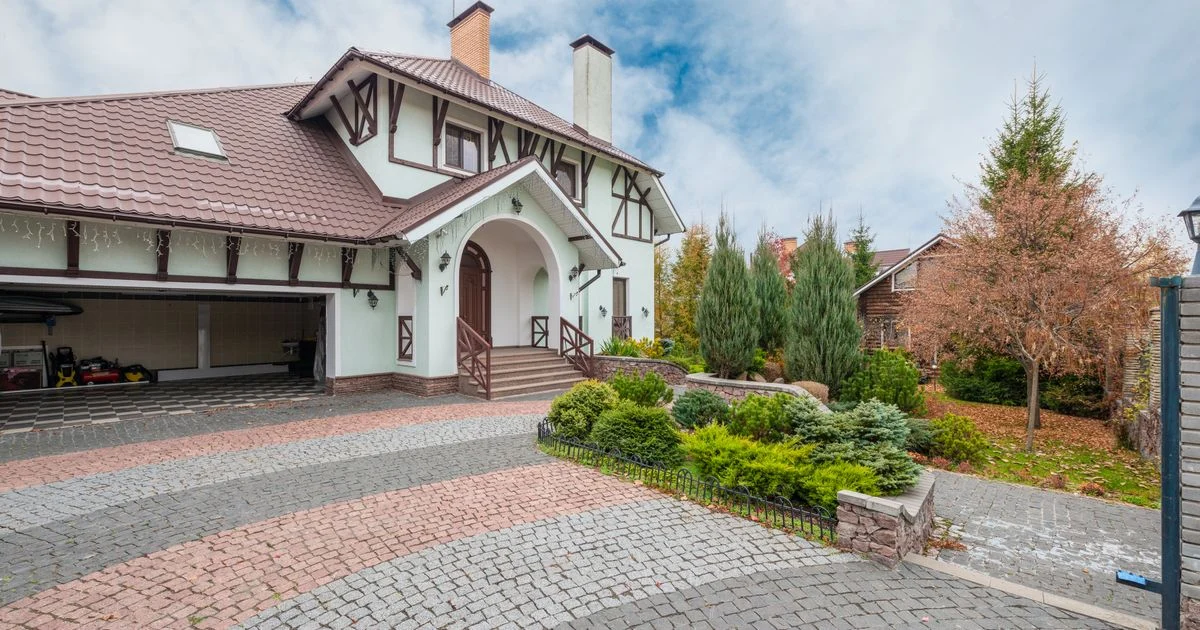
Interlocking Services in St. Catharines
Our interlocking and tile work covers homes and small commercial properties across the Niagara Region, and this page is about the St. Catharines side of that work. Most of the calls we get here fall into four kinds of job, and each one is built a little differently because the ground under it and the weight on top of it are different. If your property suits asphalt better than pavers, that is a different job, and we handle it through our paving services in the Niagara Region.
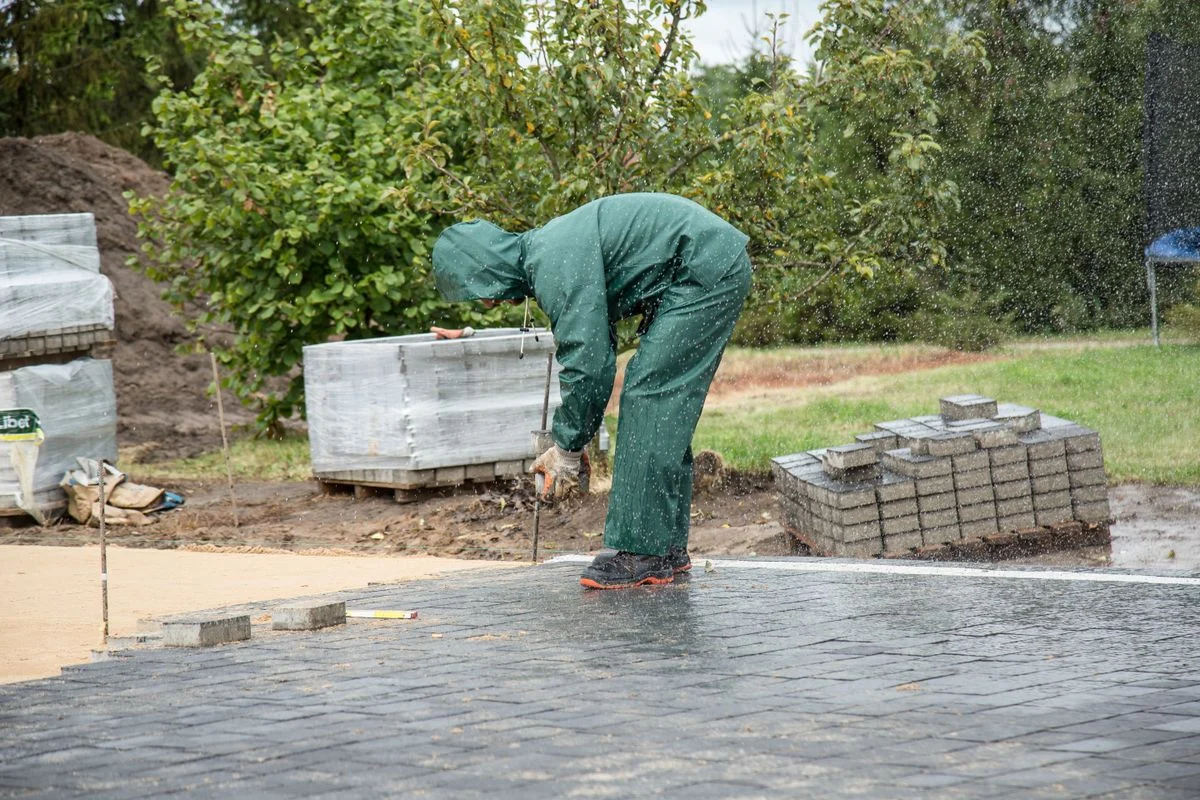
Interlocking Driveways
A driveway is the hardest working surface on most properties. It carries cars every day, takes road salt all winter, and in older parts of St. Catharines it often sits on a base that was never built for a modern vehicle. When we rebuild a driveway in interlocking pavers, we dig out the failed surface, build a proper granular base and lay vehicle rated pavers, with edge restraints that keep the pattern from spreading under load. If a track ever settles, we can lift that section, fix the base and relay the same stones.
Walkways and Steps
Walkways and steps are where a home makes its first impression, and they are also where ice and uneven slabs cause the most trouble. A front walk in interlocking pavers can be shaped around a porch, a garden bed or a tree, and steps can be built in matching pavers so the whole entry reads as one piece. We pay close attention to slope, because water that pools near a step will freeze there in January.
Patios and Porch Overlays
A patio is lived on rather than driven on, so the pattern, colour and border matter more, as does the way the patio meets the lawn and the back door. Porch overlays suit a concrete porch slab that is sound but tired looking: pavers laid over the slab, with a finished edge, give the entry a new face without breaking the slab out.
Repairs and Relaying
Not every interlocking job needs a full replacement. Sunken areas near a garage apron, a walkway heaved beside a tree root, or a patio edge that has drifted outward can often be repaired by lifting the affected pavers, correcting the base and relaying them. That local repair is one of the real advantages of interlocking over a poured slab: the rest of the surface stays put, and the repair blends in because the original stones go back in place.
The Base Work That Decides Whether Pavers Last
What makes an interlocking job last is almost never the paver itself. It is what sits underneath it. In St. Catharines, many driveways and patios failed because the base was thin, poorly compacted or laid over soft topsoil. A good base is unseen once the job is done, but it is the difference between a driveway that stays level for twenty years and one that dips after the first winter.
On a typical full rebuild we excavate well below the finished surface, allowing a thick granular base under a driveway and a thinner one under a patio or walkway, where loads are lighter. The depth depends on the soil: clay holds water and moves more than sand or gravel, and many older lots in Merritton, Facer and the downtown streets sit on heavier ground. We remove topsoil and soft or organic material, because no stone on top will fix a base built on settling soil.
For a driveway, that build means about 12 inches of excavation below the finished surface, then about 8 inches of compacted Granular A base laid in layers, then 1 inch of bedding under the pavers, with edge restraints holding the outside stones in place. Walkways and patios carry no cars, so they need less depth, about 6 to 7 inches in total.

The granular base goes in layers, each compacted with a plate compactor before the next goes down. A base compacted in one thick lift will settle unevenly, while a base compacted in lifts stays put. Over it we spread a thin bedding layer, screeded flat, and the pavers are laid on it by hand in the chosen pattern. The joints are filled with polymeric sand, which hardens when wetted and locks the stones together while still letting the surface flex a little with the seasons.
Two details deserve as much attention as the base itself. The first is edge restraints: pavers at the edge of a driveway or patio take the most sideways pressure, from turning tires and frost pushing outward, and without a proper restraint they creep apart a little each year. The second is drainage. Every surface we build slopes gently away from the house, so rain and meltwater run off toward the street or lawn rather than pooling against the foundation or icing up on the walk.
Paver Choices for Niagara Winters
Not every paver suits an Ontario winter, and the prettiest stone in a showroom is not always the one that survives five winters on a St. Catharines driveway. The pavers we use most are concrete pavers made for this climate, with a dense, low absorption body that takes up less water and suffers less when it freezes and expands. Driveway pavers are thicker than patio pavers, because they must carry vehicles without rocking or cracking.
Porcelain pavers are a newer option, and they suit patios and porch areas well, where their low absorption and clean look are real advantages. They need a different installation approach from concrete pavers, though, because they are thinner and more brittle, so the base and the bedding have to be exactly right and the choice of adhesive or pedestal system matters. If you are weighing porcelain against concrete, our guide to outdoor porcelain pavers versus concrete sets out the cost, winter behaviour and long term value of each, and our guide to the best outdoor tile for a Canadian winter covers frost resistance, grip and salt resistance in more depth.
Texture and colour are practical choices here, not just cosmetic ones. A smooth, light coloured paver shows tire marks and salt stains more than a textured, mid tone stone, and a very dark paver can look patchy after a winter of salt. For front steps and porch areas, grip matters as much as looks, because a wet step in November is a fall waiting to happen. Our guide to the best tile for a front porch in Canada explains what to look for in a surface that has to handle freeze and thaw, slip and salt at the same time. We will bring samples to your home so you can see the colour in your own light, next to your brick or siding, rather than choosing from a photo on a screen.
One more local point: road salt. St. Catharines streets get salted heavily, and that salt ends up on your driveway and walkway all winter. Good quality pavers handle it, but cheap, high absorption stone flakes at the surface after a few seasons of salt and freeze cycles. We use pavers rated for this climate, and will show you which de-icing products are kinder to pavers than straight rock salt.
Caring for Interlocking Pavers in St. Catharines Winters
Clear snow with a plastic or rubber edged blade, never a steel blade, because steel chips the paver surface and scrapes off the finish. Use a paver safe de-icer instead of straight rock salt, which can stain and damage the stone over time, and spread it sparingly rather than piling it on the joints.
In spring, walk the surface and look for joints where the sand has washed out, then top up the polymeric sand and wet it in so the joints lock again. If a paver has settled after the first winter, lift it, add bedding material underneath, and set it back level rather than leaving it to sink further. A settled paver left alone lets water pool in the low spot and loosens the stones around it.
What Interlocking Costs in St. Catharines
No two interlocking jobs cost the same, because the ground, the access and the paver change the price. A small patio with easy access and good soil costs far less per square foot than a driveway needing deep excavation, a retaining edge and old concrete hauled away. The ranges below are for a typical residential job in St. Catharines. They are a starting point for budgeting, not a quote: your written quote comes after we measure the site.
| Scope | Planning range | What it usually covers |
|---|---|---|
| Walkway or garden path | $18 to $28 per square foot | Standard pavers, straightforward access, no retaining work |
| Patio | $20 to $32 per square foot | Standard to mid range pavers, border pattern, normal excavation |
| Driveway | $24 to $38 per square foot | Thicker pavers, deeper base, edge restraints, vehicle rated |
| Porch overlay or steps | $30 to $45 per square foot | Work over an existing slab, finished edges, cutting and fitting |
| Repair or relaying | Priced per area after inspection | Lifting pavers, correcting the base and relaying the same stones |
What moves a price up or down is usually excavation and removal, whether the soil needs extra base, how far materials must be carried when access is tight, the paver you choose, and whether steps, curbs or a retaining edge are part of the job. We give every customer a written, itemized quote before work starts, with excavation, base, pavers, edging and finishing as separate lines, so there are no surprises halfway through the job.
How Much Does a 20 by 20 Interlocking Driveway Cost in St. Catharines?
A 20 by 20 foot driveway covers 400 square feet. At the driveway rate of $24 to $38 per square foot, that works out to $9,600 to $15,200 installed. A two car driveway of about 600 square feet works out to $14,400 to $22,800 at the same rate. For comparison, a 200 square foot patio at $20 to $32 per square foot works out to $4,000 to $6,400.
A job lands at the $38 end when the excavation runs deep, when old concrete has to be broken out and hauled away, when access is tight and material has to be carried in by hand, when premium pavers are chosen, or when the job includes steps or a retaining edge. A straightforward job on open ground with standard pavers lands closer to the $24 end.
Before you sign, ask for the quote broken down line by line so you can see what you are paying for: excavation and removal, base material and compaction, pavers, edging and restraints, and finishing with joint sand and cleanup. A quote that shows only one total tells you nothing about where the money goes, and two quotes for the same job cannot be compared fairly until both list the same lines.
Is Interlocking Cheaper Than Concrete?
Concrete is cheaper up front than interlocking, so a poured slab usually wins on the first quote. Interlocking earns its higher price back over time in a climate with freeze and thaw. Pavers move a little with frost instead of cracking, water drains through the joints instead of pooling on the surface, and a damaged area can be repaired stone by stone instead of replacing a whole cracked slab.
Interlocking has honest downsides too. Polymeric sand needs topping up every 3 to 5 years as it washes out of the joints, and a base that was skimped on will settle no matter how good the pavers look on the surface. If the budget only stretches to a poured slab, concrete is a sound choice, but expect cracks over time and a full slab replacement when they spread.
Neighbourhoods We Serve in St. Catharines
St. Catharines is not one kind of neighbourhood, and the work changes from one part of the city to another. In Port Dalhousie and Port Weller, in the north end, the housing stock is mature and many driveways are original concrete that has had fifty winters to crack. In Glenridge, Merritton, Western Hill and Facer, and along the older downtown streets, postwar bungalows are the typical call: a cracked driveway, a heaved front walk, or a patio settled toward the house. Near Brock University, landlords ask for durable, low upkeep surfaces, because a rental cannot afford a driveway that needs attention every spring.

At the west and south ends, where newer streets are still growing, the work is often a first interlocking installation on a newer home: a full driveway, a walkway to the front door, and a patio sized for how the family uses the yard. In the south end, along the escarpment slopes, drainage, steps and retaining edges matter more than anywhere else, because a yard that drops away from the house pushes water and frost toward the lowest point unless grading is planned from the start. Wherever you are in the city, we start with the same site visit: we walk the property, look at the soil and drainage, and talk through pattern and colour before we quote.
Why Homeowners Here Hire BGM
The simplest reason is distance. We are based in Thorold, minutes from St. Catharines, so we are not a crew that passes through town once and disappears. We measure your job ourselves, do the work with our own team, and if a paver settles or a joint needs topping up after the first winter, we are close enough to come back and sort it out. That closeness also means we know the ground here: the clay in the older neighbourhoods, the slopes in the south end, and how salt and freeze cycles wear on a surface.
Many of our St. Catharines customers come to us first for outdoor work and later ask about work inside the home, and we can help there too, from tile installation in St. Catharines and kitchen backsplash installation to bathroom renovation and shower tile installation. Beyond St. Catharines, our coverage is the whole Niagara Region, all 12 municipalities: Thorold, Niagara Falls, St. Catharines, Welland, Fort Erie, Grimsby, Lincoln, Niagara-on-the-Lake, Pelham, Port Colborne, Wainfleet and West Lincoln.
Get a Free Quote for Interlocking in St. Catharines
If your driveway, walkway or patio has seen better days, the next step is simple: call +1 365-524-1898 or use the form on this page. We will visit your property in St. Catharines, measure the area, look at the ground and the drainage, and give you a written, itemized quote with no obligation. Most quotes are ready within a day or two of the visit, and we can usually schedule the work within a few weeks, depending on the season.
Frequently Asked Questions
How much does interlocking cost in St. Catharines?
Most residential jobs fall in the planning ranges in the cost table above, roughly $18 to $45 per square foot. The final price depends on excavation, access, soil and the paver, so we quote in writing after measuring your property.
How long does an interlocking driveway last in Niagara winters?
With a proper granular base, edge restraints and polymeric sand, an interlocking driveway commonly lasts twenty years or more. Individual pavers can be lifted and reset if one area settles, so the whole surface rarely needs replacing.
Do interlocking pavers heave in winter?
A small amount of seasonal movement is normal, because pavers flex with frost instead of cracking like a rigid slab. A deep, well compacted base and proper drainage keep movement small and even, and any area that heaves can usually be levelled by relaying those pavers.
Can you repair a sunken section without replacing the whole driveway?
Yes, in most cases. We lift the affected pavers, correct the base underneath, and relay the same stones. This works best when the problem is local; if most of the surface has failed, a rebuild is better value.
Is interlocking better than concrete for a St. Catharines driveway?
For most homes here, yes. Pavers handle freeze and thaw better, they drain through the joints, and a damaged area can be repaired stone by stone. Concrete is cheaper up front, but a cracked slab usually has to be replaced in full.
When is the best time of year to install interlocking in St. Catharines?
Late spring through fall is ideal, once the ground has thawed and dried. We work into late fall while the weather allows, but we will not lay pavers on frozen ground, because the base cannot be compacted properly.
Do I need a permit for an interlocking driveway or patio?
Replacing an existing driveway or patio usually does not need a permit. If the work changes drainage, touches a sidewalk or curb, or adds a retaining wall, the city may need to be involved, and we will flag that at the site visit.
How thick should pavers be for a driveway?
80 mm is the standard thickness for driveway pavers because they carry vehicles, while 60 mm is standard for patios and walkways. The thicker paver needs the deeper base described above, so a driveway built with 60 mm pavers on a shallow base will not hold up to cars.
Should I seal my interlocking pavers?
Sealing is optional, and pavers last without it, but a sealer deepens the colour and helps hold the joint sand in place. If you seal, plan to reapply every 2 to 3 years, and wait until the pavers are clean and fully dry before the first coat goes on.
How do I compare two interlocking quotes?
Compare the itemised lines, not just the bottom line. Check the base depth, the paver thickness, the edge restraints, the polymeric sand and the aftercare each quote includes, because a cheaper quote often leaves out one of these. Two quotes for the same job should list the same work, and the one that does is usually the one worth paying for.