
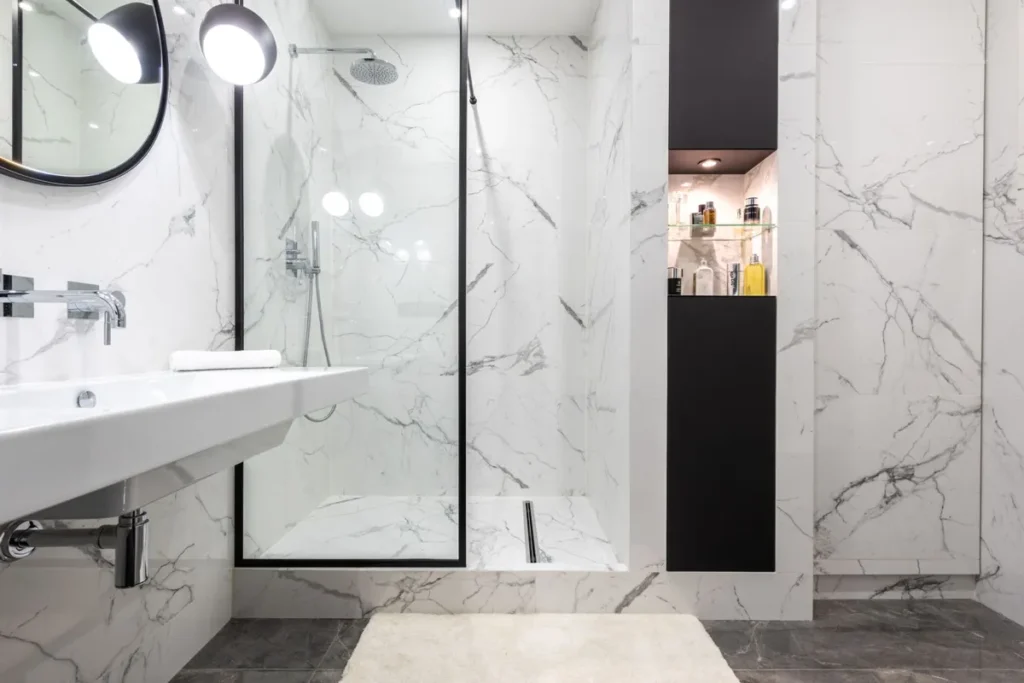
The best tile for shower walls depends on what you ask the wall to do. A family shower that runs three times a day needs a surface that shrugs off soap and hard water. A guest ensuite can carry natural stone and its sealing routine. The good news is that walls are the forgiving surface in a shower: they do not need grip, they can take gloss, and they can carry large formats that would never work underfoot. This guide compares the real candidates, porcelain, ceramic, natural stone, glass and mosaics, by water behaviour, upkeep, size and price, then gives straight picks for the situations we see most in Niagara homes. The floor plays by stricter rules; its choices live in our guide to the best tile for a shower floor.
The Shortlist
- Best overall: porcelain, near-zero water absorption, every look from subway to marble, low upkeep
- Best value: glazed ceramic, subway first, the cheapest wall that still performs for decades
- Easiest to keep clean: large format porcelain, the fewest grout lines in the room
- Best luxury: natural marble, sealed and maintained, nothing printed quite matches real veining
- Best for accents: glass tile, light, colour and depth on one wall or inside the niche, not the whole shower
Walls Are Not Floors
Three floor rules fall away at the wall. Slip resistance does not matter, so polished and glossy finishes are welcome. Size limits loosen: a 24×48 panel that could never follow a floor’s slope hangs happily on a flat wall. Weight becomes the real limit instead, because a square foot of large porcelain asks more of the board and the mortar than a sheet of mosaic does. One rule never changes: the tile is not the waterproofing. Whatever you choose still hangs on backer board and a membrane, covered in our guide on how to waterproof a shower before tiling. And the traffic runs one way. Most wall-rated tile is too thin and too soft for floors, while floor tile can usually climb a wall if its weight is managed.
Porcelain: The All-Rounder
Porcelain is ceramic fired hotter and denser, and its defining number is water absorption of half a percent or less. In a shower that means the tile itself barely drinks, so stains sit on the surface where a wipe reaches them. Printing has closed the looks gap: marble, travertine, concrete and even wood grain come off modern porcelain lines convincingly, at a fraction of the upkeep of the real materials. Rectified porcelain, cut to exact size after firing, allows hairline joints of a sixteenth of an inch for the near-seamless walls in showrooms.
The costs are weight and fussiness. Large porcelain is heavy, wants a genuinely flat wall, and asks for large-format mortar and levelling clips, which is why its installed price climbs even when the tile itself sits mid-range. Material commonly runs $3 to $20 per square foot, with the printed marble looks clustering around $5 to $12. For most showers, most of the time, this is the tile we recommend first.
Ceramic: The Value Pick
Glazed ceramic carries its waterproofing on its face: the glass-like glaze seals the body completely, so a ceramic wall tile in a shower performs far better than its porous reputation suggests. It cuts easily, weighs less than porcelain, and comes in the widest colour and shape range on the market, from the classic 3×6 subway to handmade-look squares with wavy edges. Subway tile remains the most-installed shower wall in North America for a reason: it suits almost any house, and if a future owner tires of it, it reads as neutral rather than dated.
Its limits are real but manageable. The body under the glaze is softer, so a hard knock can chip through the colour and show the clay beneath; on a wall, knocks are rare. Ceramic material commonly runs $2 to $10 per square foot, the lowest of any candidate here. For a rental, a first home, or a clean classic look on a budget, ceramic is not a compromise. It is the sensible buy.
Natural Stone: Beauty With a Duty Roster
Marble, travertine and slate bring what printing imitates: depth, variation and veining that never repeats. A honed marble wall is the luxury benchmark in a primary ensuite, and travertine’s soft beige reads calm and warm. The duty roster comes with it. Stone is porous, so it needs a penetrating sealer before grouting and fresh sealer every year or two after. Marble etches: acidic cleaners, some shampoos and even hard water left standing can dull the polish in pale rings. Honed finishes hide that wear far better than polished ones, and they suit the soft light of a bathroom better too.
Material runs $8 to $25 per square foot for marble and $5 to $15 for travertine, and installation costs more because stone varies in thickness and wants careful sorting before it goes up. Choose stone with open eyes and it rewards you for decades. Choose it for a hard-used family shower you never want to think about, and the marble-look porcelain above will make you happier.
Glass and Mosaics: The Accent Players
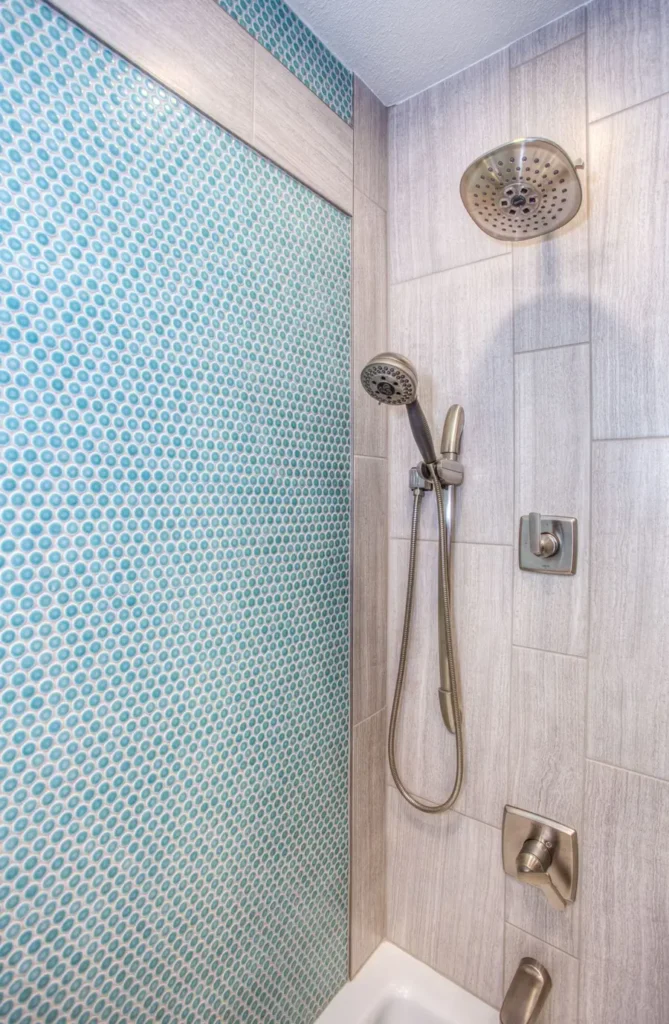
Glass tile absorbs no water at all and throws light around a small or windowless shower like nothing else. It is also the most expensive common wall material at $7 to $30 per square foot, and the most demanding to install well: the adhesive shows through the tile, so it takes white thinset and a trowel hand that leaves no ridges or bubbles. The economics resolve themselves neatly. Use glass where the eye lands. A back wall, a vertical strip, or the inside of the niche gives you the whole effect for a third of the tile bill.
Mosaics on mesh sheets play a similar supporting role. On walls they bring texture and pattern, but every small piece brings grout with it, and grout is the part of a shower you clean. Keep mosaics to the niche and accent bands, and let large, calm tile carry the big surfaces. Handmade-look tiles such as zellige belong in this family too: beautiful, uneven, priced at the top of the market, and happiest as a feature rather than a workhorse.
Sizes and Layout: What the Wall Wears Best
Size changes a shower more than colour does. Small formats, 3×6 subway, 4×4 squares, mosaics, bring many grout lines, which read as texture and tradition, forgive slightly uneven walls, and ask for more cleaning. Large formats, 12×24, 24×24, 24×48, calm the wall down, make a small shower feel bigger because the eye crosses fewer breaks, and cut the grout network to a fraction. Their price is precision: the wall must be flat, or the edges step against each other in lippage. A middle path suits many homes: large field tile on the long walls, subway or mosaic on the end wall and niche, one grout colour tying both together. Once the tile is chosen, the setting method decides how it ages; our guide on how to tile shower walls covers the ledger line, coverage and layout discipline behind a wall that stays straight.
Finish: Gloss, Matte and the Hard-Water Question
Gloss tile wipes clean fastest and bounces light, which small showers love. It also shows every dried droplet as a spot, because a mirror finish hides nothing. Matte tile hides water spots and reads soft and modern, yet its texture can hold soap film that needs a brush rather than a cloth. Satin and eggshell finishes split the difference and are where we steer most homeowners. The local factor matters here: Niagara’s water runs moderately hard, and its minerals print pale scale on dark, glossy surfaces within weeks. If your heart is set on a deep green or charcoal wall, choose it in a satin finish, plan on a squeegee habit, and know that light grey and white hide a week of hard water far better.
Grout Is Half the Decision
Homeowners pick tile for an afternoon and grout in the last five minutes, then live with both for twenty years. Cement grout is cheap, forgiving and porous: it takes a sealer and wants it renewed every year or two in a shower. Epoxy grout costs more and sets fast in the installer’s hands, but it does not absorb water, resists staining and never needs sealing. In a hard-used family shower it can be the best money in the whole job. Colour is a design lever of its own. Grout matched to the tile disappears and lets size and finish speak; contrast grout draws the grid, which flatters a perfect subway layout and betrays a sloppy one. Rectified tile narrows the joint to a sixteenth or an eighth of an inch, shrinking the grout’s share of the wall and its share of your cleaning with it.
What Shower Wall Tile Costs (Material Only)
| Material | Material cost per sq ft | Upkeep | Best role |
|---|---|---|---|
| Ceramic (glazed) | $2 to $10 | Low | Whole shower, best value |
| Porcelain | $3 to $20 | Low | Whole shower, best overall |
| Glass | $7 to $30 | Low | Accent wall, niche |
| Marble | $8 to $25 | High, sealing, etching care | Luxury ensuite |
| Travertine | $5 to $15 | Moderate to high | Warm, natural look |
| Mosaic sheets | $8 to $30 | Moderate, grout load | Niche, accent bands |
Tile is only part of the bill: across a whole shower it commonly accounts for about a third of the installed cost, with board, waterproofing, mortar, grout, trim and labour making up the rest. Our guide to shower tile installation cost prices complete shower tiling in Canada, and the bathroom tile installation cost guide covers the room beyond the glass.
Picks by Situation
- Budget refresh: glazed ceramic subway, satin finish, cement grout in a mid-grey. Timeless, cheap, repairable one tile at a time.
- Busy family shower: large format porcelain, satin finish, epoxy grout. The fewest lines to scrub and a grout that never asks for sealer.
- Small or dark shower: light porcelain or ceramic in the largest size the walls take, laid with narrow matched grout; a glass accent in the niche to catch the light.
- Luxury primary ensuite: honed marble on the walls with a matching mosaic on the floor, on a written sealing schedule, or marble-look porcelain if the schedule sounds like a chore.
- Steam shower: porcelain, full stop. Its near-zero absorption and stable glaze handle constant vapour better than stone, which drinks steam and the minerals in it.
Watch: Choosing Shower Wall Tile
Shower Tile Work in the Niagara Region
BGM Construction builds tiled showers across the Niagara Region from its base in Thorold, and tile selection is part of the quote conversation, not an errand left to the homeowner. Samples come to the site, get held against your light and your floor tile, and the upkeep talk happens before anyone commits. BGM Construction, 5 Swart Ln, Thorold, ON L2V 0G5. Open Monday to Saturday: 8:00 AM to 5:00 PM. Call +1 365-524-1898 for a free quote. Our shower tile installation services page shows what a complete build includes once the tile is picked.
The team tiles showers in Thorold, Niagara Falls, St. Catharines and Welland, and the bathroom tile contractors page covers the wider bathroom work around the shower.
Get a Price for Your Shower
Bring two or three tile candidates and your shower measurements, and the quote will price each one honestly, including what the tile does to the labour. Call BGM Construction at +1 365-524-1898 or send the details through the contact page. You receive an itemised quote that separates materials, preparation and tile work.
Frequently Asked Questions
What is the best tile for shower walls overall?
Porcelain, for most showers. It absorbs half a percent of water or less, comes in every format and finish including convincing marble looks, needs no sealing, and asks for nothing beyond normal cleaning. Ceramic beats it on price, stone beats it on natural depth, and glass beats it for light, but as one answer for the whole shower, porcelain is the safest recommendation.
Is porcelain or ceramic better for shower walls?
On a wall, the gap is smaller than on a floor. Ceramic’s glaze seals it completely, it costs less and it cuts easier, so for classic formats it performs beautifully. Porcelain pulls ahead in large formats, in steam showers, and wherever the hardest-wearing surface matters. If the budget forces a choice, ceramic walls with the savings spent on epoxy grout age better than porcelain walls with cheap grout.
What size tile makes a small shower look bigger?
The largest tile the walls can take, within reason: 12×24 is the usual sweet spot, and 24-inch formats work when the walls are flat. Fewer breaks let the eye read the wall as one calm surface. Keep the grout narrow and matched to the tile colour, and run the same tile up every wall rather than breaking the room with accents on each side.
Is glossy tile OK on shower walls?
Yes. Slip ratings govern floors, not walls, so gloss and even polished finishes are safe on shower walls. The trade is cosmetic: gloss shows dried water spots and soap streaks more than matte or satin, and hard water prints on it faster. In a bright, hard-used shower, satin usually looks clean for longer with less wiping.
Does shower wall tile need to be sealed?
Glazed ceramic and porcelain tiles do not need sealing; their surfaces are already closed. Natural stone does, before grouting and every year or two after. The grout is separate: cement grout in a shower should be sealed and renewed on the same yearly rhythm, while epoxy grout never needs it.
Can wall tile go on a shower floor, or floor tile on walls?
One direction only. Floor tile can usually go on walls if the wall, board and mortar can carry its weight. Wall tile must not go on floors: it is made thinner and softer, it is not rated for foot traffic or slip, and it cracks and wears under use a floor sees in its first year. Buy each surface its own tile and let them coordinate rather than match.









One Response