
Yes, can you tile over existing tile is a question with a conditional answer, and the conditions are not fine print. They are the whole job. Tiling over a sound old floor skips days of demolition, dust and disposal, and professionals do it routinely. Tiling over a failing one builds a new floor on a broken promise: the fresh tile can only ever be as well attached as the old tile beneath it. This guide sets out the tests that decide it, the preparation the shortcut still demands, and the two hidden costs, height and weight, that rule it out in more homes than any other factor.
The First Truth: Your New Floor Inherits the Old Floor’s Bond
Every layer in a floor is a chain, and a chain fails at its weakest link. When new tile is bonded to old tile, the result depends on three bonds: new tile to new mortar, new mortar to old tile, and, the one nobody can improve from above, old tile to whatever is under it. If the third bond is letting go anywhere, the whole stack above that spot lets go with it, usually a season or two later when the repair bill is largest. That is why the decision is never made from how the old floor looks. It is made from how it sounds.
The Sound Test: How to Audit the Old Floor
Tap every tile, a wooden dowel, a screwdriver handle, a golf ball rolled across the field, and listen. A well-bonded tile answers with a solid, higher click. A tile that has lost its bond answers hollow, a drummy echo tile setters recognise instantly. Mark the hollow ones with tape as you go. The working rules from professional practice:
- Scattered hollow tiles, a few percent of the floor, can be removed individually and their pockets patched flush with patching compound or mortar.
- Hollow or loose areas beyond roughly five percent of the floor end the discussion: the old floor comes up. Patching that much failure is slower than demolition and still leaves the sound tiles aging on the same failing bed.
- Any tile that moves, rocks or crunches underfoot is an automatic removal, whatever the count.
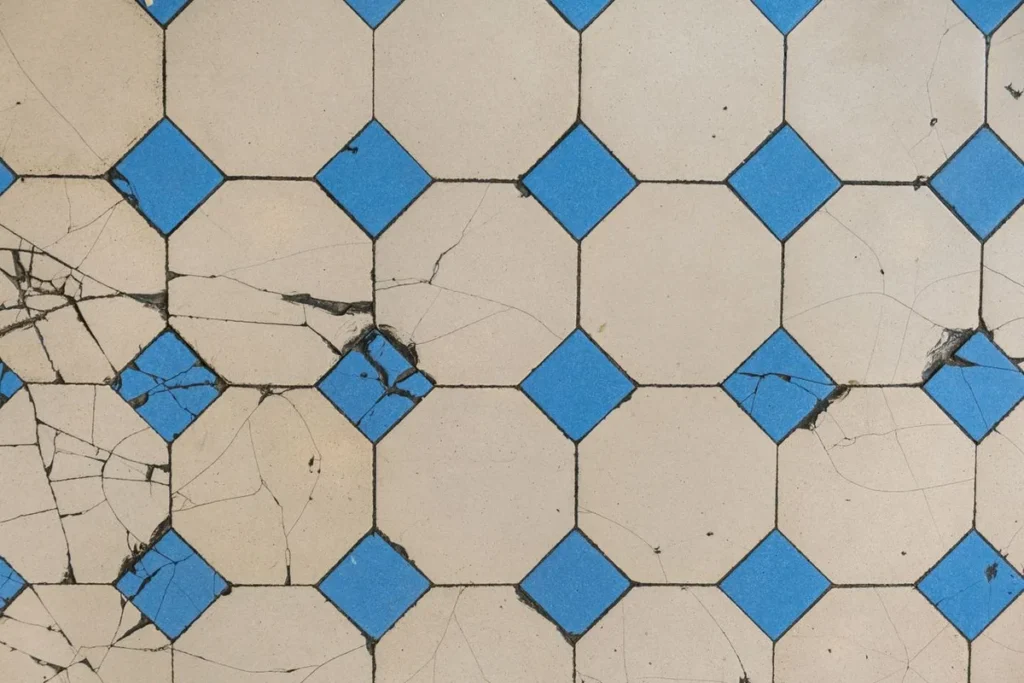
- Cracked old tile is evidence, not just damage: cracks that run across several tiles in a line usually report movement or deflection underneath, and new tile laid over a moving base cracks in the same place. Hairline cracks in a single tile from a dropped pan are a different, smaller story.
Flatness and What Lies Beneath
The new layer follows the old layer’s shape. Lippage, dips and humps in the existing floor print through into the new one, slightly softened at best; a straightedge across the old floor tells you what you are buying. Small depressions at grout lines disappear under the new bed, but real unevenness must be levelled first, and a floor that needs heavy levelling has usually given up the time saving that justified the overlay. Two more beneath-the-surface checks matter. The substrate under the old tile is now uninspectable except at the edges and through the sound test, which is one reason wet areas get their own warning below. And if the old floor is already an overlay, tile over tile from a previous renovation, stop there: a third layer is not a floor, it is a geology project, and no reputable setter stacks one.
The Two Hidden Costs: Height and Weight
Height: roughly 3/8 to 3/4 of an inch
A new mortar bed plus a new tile adds about 3/8 to 3/4 of an inch to the finished floor (roughly 10 to 19 mm), and that modest number collides with everything that meets the floor. Doors may need trimming so they swing over the new height; transitions into lower adjoining rooms become a step that needs a proper reducer, not a trip edge; casings and baseboards sit slightly wrong until adjusted. In bathrooms the critical one is the toilet: the flange must sit at or just above the new finished height, so an overlay usually calls for a flange extender or a doubled wax seal arrangement, skip it and the toilet leaks silently into the very floor stack you just built. Appliances matter too: a dishwasher that barely slides under the counter today may not come out tomorrow.
Weight: roughly 5 to 10 more pounds per square foot
The new assembly, tile plus mortar, adds about 5 to 10 lb per square foot on top of the old floor’s existing load. On a concrete slab that is nothing. On a wood-framed floor it is a real structural question: joists already carrying one tile layer, possibly with the deflection that cracked floors report, now carry two. Long spans, older framing and any floor that already feels springy argue for removal and a proper assessment, or for a lighter finish altogether. Walls have their own version of the same limit: board and plaster have recognised weight ratings per square metre, and a second layer of wall tile can exceed what the board behind the old tile was ever asked to hold.
The Preparation the Shortcut Still Demands
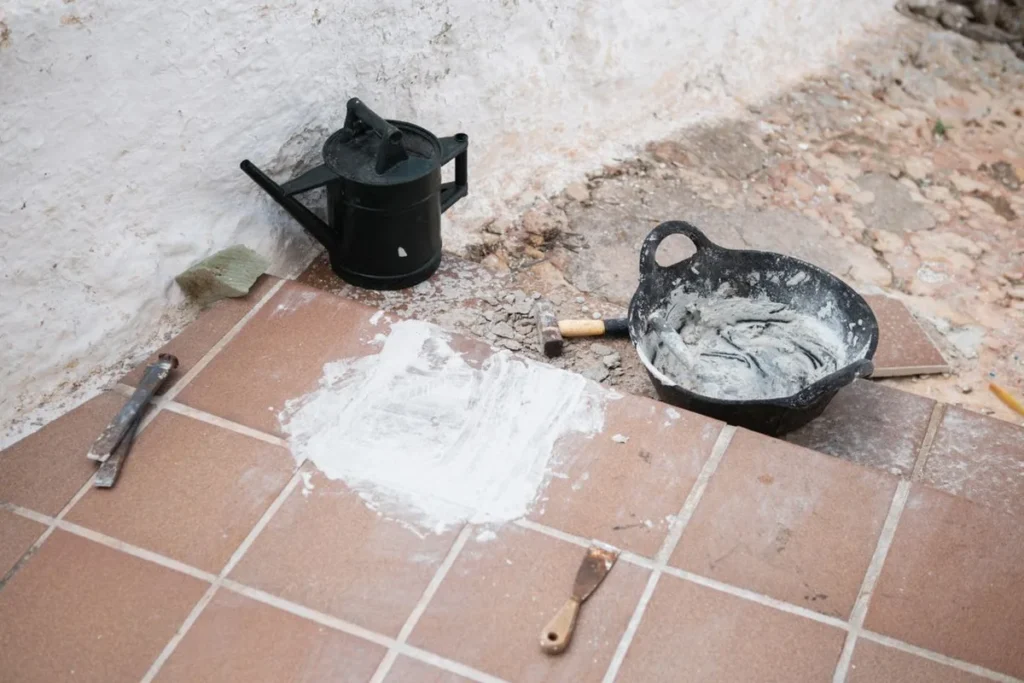
Tile-over-tile saves demolition. It does not save preparation, and the prep has one job: making a glazed, sealed, often greasy surface into something mortar can grip. In checklist form:
- Remove every failed tile found in the sound test and patch the pockets flush.
- Clean like it matters: degrease thoroughly (a TSP wash is the classic), because kitchen grease, wax, sealers and soap film are all bond breakers, then rinse and let the floor dry fully.
- Give the glaze a profile: scarify or grind the tile faces with a diamond wheel, or, the cleaner modern route, apply a specialist aggregate bonding primer made for non-porous surfaces, which cures to a gritty texture mortar locks onto.
- Set the new tile in a premium polymer-modified thinset whose maker rates it for tile-over-tile work. This is not the shelf to economise on: the mortar is doing a harder job than usual, over a surface that gives it nothing for free.
The step-by-step setting method itself, layout, combing, coverage, follows the same discipline as our shower floor method and wall work in the how to tile shower walls guide.
When Removal Wins Anyway
- The sound test fails widely, or tiles crack in lines that report movement below.
- It is a shower or a wet-area floor with any leak history: the waterproofing under old tile cannot be inspected, patched or renewed from above, so an overlay freezes an unknown problem under a new one.
- Height collides with doors, appliances or the toilet flange with no clean fix.
- The floor is wood-framed, springy, or already an overlay.
- The renovation changes plumbing or layout, moving a drain or a toilet means opening the floor regardless, and the demolition saving evaporates.
Demolition also buys one thing an overlay never can: a look at the truth. Subfloor rot, quiet leaks, undersized joists: everything an overlay hides, removal exposes while it is still cheap to fix. When a floor’s history is unknown, that look is often worth the skip bin on its own. Material quantities for the new layer, whichever route you take, follow the coverage math in our thinset coverage guide, and whole-room budgets sit in the bathroom tile installation cost guide.
Watch: Tiling Over Tile, Judged Honestly
An Honest Audit Before You Commit
BGM Construction will happily tile over a floor that passes its tests, and will tell you plainly when yours should come up instead, because the company name goes on the result either way. BGM Construction, 5 Swart Ln, Thorold, ON L2V 0G5. Open Monday to Saturday: 8:00 AM to 5:00 PM. Call +1 365-524-1898 for a free quote. Our tile installation services page covers both routes, removal and overlay.
The team works across Thorold, Niagara Falls, St. Catharines and Welland.
Get the Sound Test Done Properly
Book the audit before you buy a single box. Call BGM Construction at +1 365-524-1898 or reach us through the contact page, and you will know in one visit whether your floor is a candidate or a demolition.
Frequently Asked Questions
Can you tile over tile in a shower?
On shower walls, occasionally, when the existing tile is perfectly bonded and the waterproofing behind it is known to be sound, a rare combination to verify from the surface. On a shower floor, our answer is no: the floor’s slope, drain connection and waterproofing all sit under the old tile where they cannot be inspected or renewed, and a new floor traps whatever is failing down there. Shower floors come up.
How do I know if the old tile is bonded well enough?
The tap test: strike or roll across every tile and listen for the change from a solid click to a hollow, drummy note. Bond failure concentrates at doorways, in front of sinks and along the room’s traffic lanes, so test those areas twice. A scattered few percent of hollow tiles can be cut out and patched; widespread hollowness means the old floor’s bond has had its life.
How much height does tile over tile add?
Roughly 3/8 to 3/4 of an inch (10 to 19 mm): the new mortar bed plus the new tile’s thickness. Measure it against your tightest constraint before deciding: usually the bathroom door’s swing, the dishwasher’s clearance, or the toilet flange height, which must end at or just above the new floor level to seal.
Can you tile over cracked old tile?
A single tile cracked by impact can be removed and its pocket patched. A crack pattern, running across joints and several tiles, or mirroring between rooms, reports movement underneath: deflection, a shifting substrate, a failed bed. New tile over movement cracks again in the same geography, so the cause gets fixed first, which means removal.
Can you tile over a heated floor’s tile?
Technically the bond question is the same, but practically it stacks problems: the added layer insulates the heat below it (the system works harder for a cooler floor), the total build-up grows, and any future heating fault now sits under two floors instead of one. Where the heat matters to you, removal and a new system is the honest recommendation.
Does tiling over tile actually save money?
It saves the demolition line, labour, disposal, and often a day of schedule, and spends part of it back on preparation: degreasing, grinding or bonding primer, premium mortar, flange extenders and door trimming. On a floor that passes its tests the saving is real. On a floor that fails two years later, it is the most expensive route available, which is why the audit comes before the arithmetic.









2 Responses