
There is a reason so many front steps, garden walls and porches around St. Catharines are built from stone. It fits the older brick homes downtown, it suits the postwar bungalows in the north end, and it still looks right on the newer houses going up at the west and south ends of the city. When it is laid properly, stone also stands up to the winters here in a way that poured concrete and thin manufactured panels often do not.
BGM Construction LTD is based just minutes away in Thorold, and we build and repair natural stone work for homeowners across St. Catharines. That local base matters when a job needs a second visit, when a stone delivery has to be checked before it is set, and when a repair has to be matched to work that is already there. You deal with the same crew from the first site visit to the final walk through.
This page covers what we build, how we choose stone for the Niagara climate, what the base work involves, and what stone work tends to cost in St. Catharines. For the general picture of our work, you can also read about our stone work across the region. For a free, written quote, call us at +1 365-524-1898 or use the form on this page.
BGM Construction LTD does stone work in St. Catharines, including stone tile floors and walls, stone veneer and feature work. We are based in Thorold, a short drive from St. Catharines, and we serve homes across the city. Every job starts with a free written quote, and you can reach us at +1 365-524-1898.
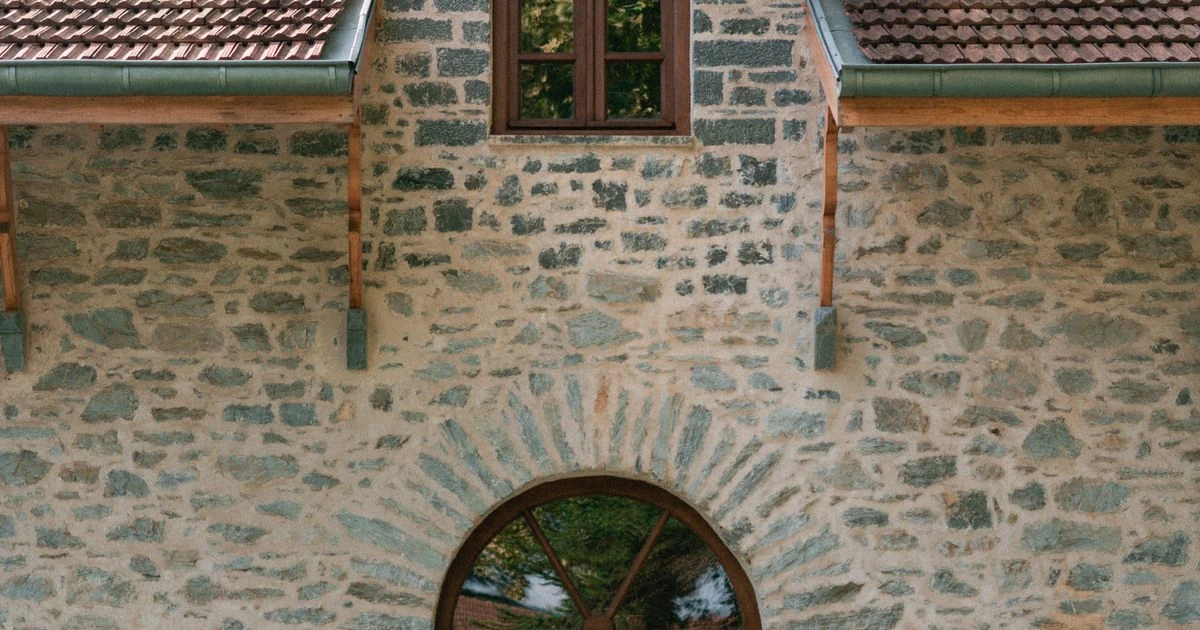
Stone Services in St. Catharines
Most of the stone jobs we take on in the city fall into a few familiar groups. A front wall or a porch column gets a new stone face. A cracked concrete walk comes out and goes back in as flagstone. A set of steps that has shifted over the years gets rebuilt on a proper footing. Each job is different, but the questions are usually the same: will it last, will it drain, and will it suit the house?
- Natural stone veneer and facing. A thin, real stone face over a sound wall, porch column or foundation, giving the look of full stone without rebuilding the wall itself.
- Flagstone walks and patios. Large, flat pieces set on a compacted base, with joints that drain and a surface that stays comfortable to walk on.
- Stone steps and landings. Solid treads and a stable landing at the front door, the back door or down to a garden, built so they do not shift with the seasons.
- Retaining and feature walls. Low garden walls that hold back a bank, edge a bed or frame a patio, and taller feature walls that give a yard some shape.
- Interior stone feature walls and fireplace surrounds. Stone inside the house, around a fireplace or along one living room wall, where the texture does the decorating.
- Stone repairs and repointing. Loose pieces reset, cracked mortar raked out and replaced, and sections of an old wall rebuilt to match the stone that is already there.
Stone often fits in alongside other work in the house as well. Homeowners planning a wider renovation sometimes ask us about tile installation for floors and entryways, a kitchen backsplash to sit near a stone hearth, or a shower tile installation when a bathroom is being redone. If the whole room is changing, our bathroom renovation work in St. Catharines covers the wider job, not just one wall.

Choosing Stone for the Niagara Climate
The test for any stone here is not how it looks on delivery day. It is how it looks after five winters. Water gets into pores and small cracks, freezes, expands, and pushes the stone apart from the inside. That is why dense stone with low absorption does best here, and why a pretty but soft stone can flake and crumble on an exposed step or wall cap.
Granite is the hardest wearing choice and a good pick for steps and heavily used walks. Limestone has a warmer, softer look and works well for veneer and feature walls, though it benefits from sealing in exposed spots. Sandstone brings colour and texture, but the piece has to be dense enough for outdoor use, and we will say so plainly if the batch in front of us is not. Slate suits landings and patio areas where a flatter, more even surface matters. Whatever the stone, the mortar and the joints matter just as much: flexible, well filled joints move a little with the seasons instead of cracking open.
Homes near the lake at the north shore get more wind and spray, and road salt finds its way onto front walks and steps all winter. We allow for that in the stone choice and in the finish, and we keep the surface easy to clean. If your home already has natural stone inside, our guides explain how to clean travertine tiles and how to seal marble, so the surface keeps its finish between visits from us.
Base Preparation and Method
Stone fails from underneath, not from the top. A beautiful stone set on soft or poorly drained ground will move, and once it moves, water follows. Most of our time on an outdoor job goes into what you never see.
- Site visit and measuring. We look at the ground, the drainage, the access for deliveries and the height changes across the yard, then measure the area properly.
- Excavation and base. Old material comes out, and a compacted granular base goes in, in layers, so the ground under the stone is firm and even.
- Drainage. Water is given a way out, away from the house and away from the base, with the grade set so puddles do not sit against the stone.
- Setting and levelling. Each piece is set by hand, checked for level and for height against its neighbours, and adjusted before the mortar or jointing goes in.
- Jointing and finishing. Joints are filled and tooled, edges are cleaned, and the work is left tidy rather than covered in dust and offcuts.
- Final walk through. We walk the job with you, point out anything to watch, and explain how to look after the stone through its first winter.
Mortar and jointing need time to cure, so we plan outdoor jobs for dry spells where we can and we will not rush a finish in bad weather. A small walk can be done in a few days. A larger patio, a wall or a full set of steps takes longer, and we will give you a realistic schedule at the quote stage rather than a hopeful one.
Choosing the Right Natural Stone for Your St. Catharines Home
Not every natural stone behaves the same way indoors, so the choice should start with the room and how it will be used, not with the sample that looks best in the showroom. A stone that is perfect for a fireplace surround can be a poor choice for a front entry that sees wet boots in January, and a stone that looks calm on a bathroom wall can be too soft for a kitchen floor. The four stones we are asked about most for indoor work in St. Catharines are travertine, slate, granite tile and limestone, and each one asks for a different level of care.
Travertine is a limestone that formed around mineral springs, and its surface has small pits and open pores that give it a warm, soft look. Those pores mean it absorbs water and stains more readily than denser stone, so it suits feature walls, fireplace surrounds and low traffic floors where it can be sealed well and cleaned gently. It is not the best pick for a busy entry or a shower floor that stays wet, because the surface will show wear and water marks sooner there.
Slate is a layered stone that splits into flat sheets, and it is naturally slip resistant when it has a textured face. That makes it a strong choice for entries, mudrooms and laundry floors, where wet shoes are normal. Its colour varies from piece to piece, so a slate floor has a varied, rustic look rather than a uniform one, and the edges can be uneven, which means wider joints and a more forgiving layout.
Granite tile is cut from a very hard igneous stone, and it is the toughest of the four for floors that take daily traffic. It resists scratches and stains better than travertine or limestone, and it holds a polished or honed finish for years in a kitchen or entry. The downside is weight and hardness: it is heavy to carry and hard to cut, and a polished granite floor can be slippery when wet, so a honed finish is often the better choice in a home with children or older family members.
Limestone is softer and more porous than granite, and it has a pale, even colour that suits calm bathrooms and feature walls. It scratches and marks more easily than the other stones here, so it is best kept away from heavy traffic and from acidic spills such as lemon juice, vinegar and some cleaners. In the right spot, a limestone wall or a low traffic floor can look settled and quiet for many years.
Stone also needs a stronger and flatter floor underneath it than ceramic tile does. Ceramic tile is light, thin and made to a regular size, so it can tolerate a small amount of movement and a slight unevenness in the floor below. Natural stone is heavier, thicker and varies in thickness from piece to piece, so the floor below it has to be stronger, stiffer and flatter. If the subfloor bends underfoot, stone cracks instead of bending with it, and if the floor is not flat, the thicker pieces will sit high and catch feet and cleaning tools. Before stone goes down, we check the subfloor for bounce and for flatness, add support or a suitable underlayment where it is needed, and use a levelling system so the finished surface sits true. That preparation is one reason a stone floor costs more to install than a ceramic floor of the same size, and it is also the reason it stays flat and quiet underfoot.
Here is how we work through that choice with you on a real job.
- Walk the room with you and note traffic, water, sunlight and who uses the space.
- Bring samples of travertine, slate, granite tile and limestone and lay them in the room so you can see them in your own light.
- Check the subfloor for strength and flatness and tell you what preparation it needs before any stone is ordered.
- Agree on the finish, honed or polished, and the joint width, because both change how the stone looks and how it wears.
- Seal the stone before grouting where the stone needs it, then seal it again once the work is finished.
- Leave you with written care instructions and a resealing schedule, so the stone is looked after from the first week.
Sealing is part of owning natural stone, and it helps to be honest about what sealer does and does not do. Every porous stone in this section, travertine, slate and limestone in particular, should be sealed before it is used and sealed again on a regular schedule. Sealer does not make stone stain proof. It buys time to wipe up a spill before it soaks in, and it makes routine cleaning easier. A sealer on a kitchen floor or an entry will wear faster than a sealer on a feature wall, so plan on resealing floors more often than walls, and test a small hidden area first if you change cleaners. For day to day care, sweep or vacuum with a soft head, mop with clean water and a cleaner made for natural stone, and wipe spills as soon as you see them. Avoid bleach, vinegar and abrasive pads, because they can dull the finish or open the pores. If you are willing to do that simple routine, natural stone will age well. If you want a surface you never have to think about, stone is probably not the right choice, and we will say so at the quote stage.
Freeze and thaw is the other test for any stone used outside in the Niagara climate. Water gets into small cracks and pores, freezes, expands and then thaws again, many times each winter, and that cycle is what splits weak stone and pops pieces off a wall or a step. For exterior work, we choose dense, low absorption stone, we set it on a drained and compacted base so water does not sit under it, and we keep joints filled so water cannot collect in gaps. Flagstone walks and patios need that drained base more than any other exterior stone, because a patio that holds water in winter will heave and crack. The planning range for a flagstone walk or patio on this page is $28 to $55 per square foot installed, and that range already allows for the base work that keeps it stable. Stone steps need the same treatment, and they should be checked each spring for joints that have opened over winter, so small repairs can be made before water gets in again.
Stone suits the front of an older home downtown, a porch column in Glenridge or Merritton, and a fireplace surround in a postwar bungalow in the north end, because it matches the weight and age of those houses. It also suits a new build at the west or south end where the owner wants one strong feature, such as a fireplace surround, rather than stone on every surface. The planning range for a fireplace surround on this page is $2,500 to $7,500 per surround, which shows why it helps to choose one feature and do it well. Stone is less suited to a small rental bathroom that will be cleaned with strong chemicals, or to a front walk that will be salted heavily all winter without any care. For the full list of services across the city, see our St. Catharines page.

Costs in St. Catharines
No two stone jobs cost the same, because the stone itself is only part of the price. Access to the yard, how much excavation is needed, how high a wall runs, whether old concrete has to come out, and how far the stone has to travel all move the number. The table below gives planning ranges in Canadian dollars, installed, for typical St. Catharines jobs. They are a starting point for budgeting, not a quote.
| Project | Planning range, installed |
|---|---|
| Stone veneer | $35 to $65 per square foot |
| Flagstone walk or patio | $28 to $55 per square foot |
| Stone steps | $450 to $1,200 per step |
| Retaining wall | $55 to $110 per square foot of wall face |
| Fireplace surround | $2,500 to $7,500 per surround |
Your written quote comes after we measure the area and see the ground. It lists the stone, the base work, disposal of old material and labour as separate lines, so you can see exactly what you are paying for. If anything changes once work starts, we put that change in writing before we carry it out.
Neighbourhoods Served
In Port Dalhousie and Port Weller, at the north end of the city, the housing stock is mature and the lake weather is a daily fact of life. Front steps, porch walls and garden edging here have often been repaired more than once, and the work that lasts is the work with a proper base and stone that can take wind, spray and salt.
Glenridge, Merritton, Western Hill, Facer and the older downtown streets bring a different mix: older brick homes, narrower lots and front yards where access for stone delivery can be tight. Veneer work suits many of these houses, because it changes the face of the home without rebuilding the wall, and a rebuilt set of steps can transform a front entrance that has been patched for years.
Growth at the west and south ends of the city means newer subdivisions, larger lots and more room to build patios, garden walls and outdoor living areas from scratch. In the south end, near Brock University, rental homes need stone work that is durable and easy to maintain, and landlords often ask us for steps and walks that will not need attention every spring.
The escarpment slopes in the south end shape a lot of St. Catharines yards. A sloped lot may need a retaining wall before a patio makes sense, and drainage on a slope has to be planned, not left to chance. We build the wall and the drainage together, so the patio above it stays level.
Beyond St. Catharines, we work across the whole Niagara Region, including Thorold, Niagara Falls, Welland, Fort Erie, Grimsby, Lincoln, Niagara-on-the-Lake, Pelham, Port Colborne, Wainfleet and West Lincoln.
Why Homeowners Here Hire BGM
Being based minutes away in Thorold means we are not travelling in from another city for your job. We know the housing stock here, we know which streets have tight access, and we can come back if a question comes up after the work is done. That closeness is worth more than it sounds when a delivery needs checking or a small adjustment is needed.
The written, itemized quote is the other thing homeowners mention. You get the stone, the base work, disposal and labour as separate lines, in writing, before any work starts. There is no vague lump sum to argue about later, and no surprise additions halfway through the job.
We also leave the site tidy. Stone work makes dust and rubble, and a job is not finished in our view until the offcuts are gone, the driveway is swept and the new work is clean enough to photograph. Your neighbours will notice the new steps, not the mess we left behind.

If your steps are shifting, your walk is cracking, or you have a wall, patio or fireplace in mind, talk to us before the next freeze and thaw season makes it worse. Call BGM Construction LTD at +1 365-524-1898 for a free quote, or send the form on this page and we will arrange a site visit in St. Catharines.
Frequently Asked Questions
How much does stone work cost in St. Catharines?
It depends on the stone, the area and the ground underneath. As a planning guide, veneer runs $35 to $65 per square foot installed, and a flagstone patio runs $28 to $55 per square foot. Your written quote, after measuring, is the number to budget from.
What type of stone lasts best through an Ontario winter?
Dense, low absorption stone such as granite does best on steps and walks. Limestone and sandstone can work well too, provided the pieces are dense enough and the base and drainage are right. The base matters at least as much as the stone itself.
Can stone veneer be installed over existing brick or siding?
Veneer can usually go over sound brick, once the wall has been checked and prepared. Siding normally has to come off first so the veneer has a solid surface to fix to. We check the wall at the site visit and tell you honestly if it is suitable.
Do you repair existing stone steps and walls?
Yes. Loose pieces can be reset, failed mortar can be raked out and repointed, and a damaged section of wall can be rebuilt to match the stone around it. If a full rebuild would cost less than repeated repairs, we will say so.
How long does a typical stone patio or walkway take?
A small walk usually takes two to three working days. A patio or a larger walk takes four to seven working days, depending on excavation and weather. Steps and walls vary with height and access, and we confirm a schedule in the quote.
Do I need a permit for a retaining wall in St. Catharines?
Low garden walls usually do not need one. Taller walls, walls near a property line, or walls holding back a slope often do, and some may need an engineered design. We flag this at the site visit and help with what the city asks for.
When is the best time of year for stone work?
Late spring to early fall is best, because mortar cures well in mild, dry weather. We book outdoor work through the warmer months, and we will tell you plainly if a late fall start risks a poor finish. Interior stone work can be done year round.
Which natural stone is best for a kitchen floor in St. Catharines?
Granite tile is usually the best choice for a kitchen floor, because it is hard, resists stains and scratches, and handles dropped pots and daily traffic better than travertine, slate or limestone. A honed finish is often better than a polished finish in a kitchen, because it shows fewer marks and is less slippery when wet. Travertine and limestone can work in a kitchen if they are sealed well and cleaned gently, but they will show wear sooner, so we usually suggest them for feature walls and fireplace surrounds instead.
Does natural stone need to be sealed, and how often should it be resealed?
Yes. Travertine, slate and limestone are porous, so they should be sealed before use and resealed on a regular schedule, while even dense granite tile benefits from a sealer on its grout joints. Sealer does not make stone stain proof, but it gives you time to wipe up a spill before it soaks in. Floors in entries and kitchens wear their sealer faster than feature walls, so they need resealing more often. We leave written care instructions and a resealing schedule with every stone job, and we can reseal the stone for you when the time comes.