
If your driveway in Niagara Falls has started to sink at the edges, or your front walk has heaved after a few winters, interlocking pavers are worth a serious look. They give you a hard, attractive surface that can be lifted and reset when the ground moves, instead of a slab that has to be torn out and poured again. BGM Construction LTD builds interlocking driveways, walkways, patios, porch overlays and steps across Niagara Falls, and we are based minutes away in Thorold.
Most of the interlocking work we are called to here falls into two groups. In older neighbourhoods, homeowners want to replace a cracked concrete driveway or a tired asphalt drive at the end of its life. In newer subdivisions, the builder grade drive or walk is thin and plain and already showing wear, and owners want something that looks better and holds up to parking, snow clearing and road salt.
Call BGM Construction LTD at +1 365-524-1898 or fill in the free quote form on this page, and we will arrange a visit to your Niagara Falls home. Every quote is written and itemized, so you can see what the base work, the pavers and the edging each cost before you decide.

Interlocking Services in Niagara Falls
We install interlocking pavers for the full range of outdoor surfaces around a Niagara Falls home, and we also repair work that has settled. Because pavers are individual units, a damaged area can be lifted, the base corrected and the same pavers put back. Our interlocking and tile work page covers the service across the region, while this page is about hiring us for a project at your address in Niagara Falls.
Interlocking Driveways
A driveway is the hardest working surface on a property. It carries cars every day, it takes snowplow blades and shovels in winter, and it has to drain away from the house and the garage. We build driveways with thicker pavers and a deeper base than a walkway, with a solid edge restraint so the pavers cannot creep outward under turning tires.
Walkways and Steps
A front walk sets the tone for the whole house, and it is also where most trips happen. We rebuild walks that have heaved, settled or broken into sections, and we build new walks from the driveway to the front door, around the side of the house and out to a backyard patio. Steps are built as part of the same job, with pavers set on a stable base and capped so the tread stays level and easy to clear in winter.
Patios and Porch Overlays
A patio in pavers gives you a level place for a table, chairs and a grill, and it drains better than a flat slab because water can pass through the joints. We build patios in the backyard, beside a pool deck and off a side door, often with a border course that ties the patio into the walk that leads to it. A porch overlay is a good option when the existing concrete porch is sound but dated. If the porch underneath is cracked through or badly settled, we will price a rebuild instead.
Repairs and Relaying
Not every interlocking job is a new build. Sunken areas near a downspout, a low spot where a car always parks, or a section that has spread at the edge can often be repaired without replacing the whole surface. We lift the affected pavers, correct the base, reset the pavers level and refill the joints with polymeric sand.
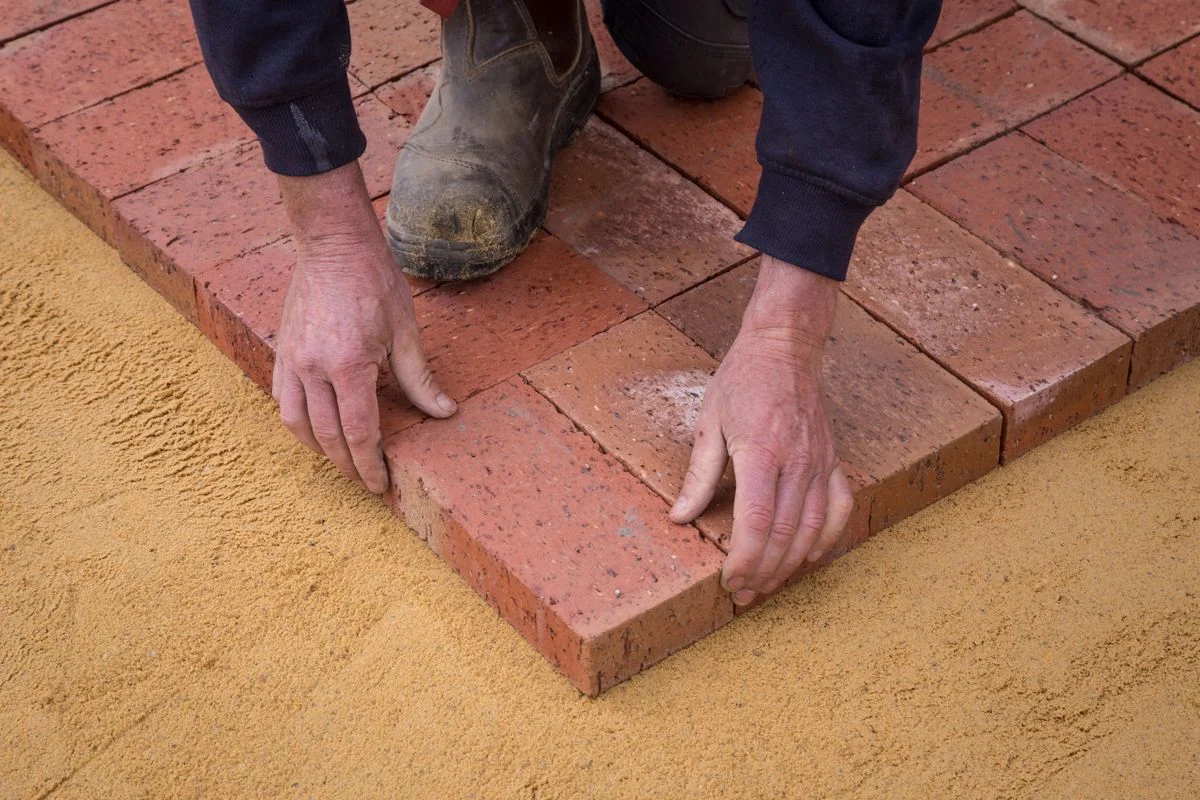
The Base Work That Decides Whether Pavers Last
Ask any installer who has had to fix a failed driveway, and the answer is the same: pavers rarely fail, bases do. A paver surface is only as good as what sits underneath it, and in Niagara Falls that means planning for freeze and thaw, for clay soils that hold water, and for the weight of cars on a driveway.
- Excavation: driveways are excavated deeper than walkways, and all soft or organic material is removed.
- Granular base: crushed granular material is placed in layers and compacted, so the base is dense and even.
- Bedding layer: a thin, screeded layer of bedding sand gives the pavers a level seat.
- Edge restraints: concrete or plastic edging, pinned in place, holds the pavers tight so they cannot spread.
- Joint sand: polymeric sand is swept into the joints and activated with water, locking the pavers together.
- Drainage slope: the finished surface is sloped away from the house, typically about 2 percent, so water does not pool against the foundation.
On escarpment lots and on properties where the yard slopes toward the house, drainage needs extra care. We look at where downspouts discharge, where snow melt runs in spring and whether a low area collects water after rain. In some cases that means adjusting the grade or adding a drain before the pavers go in.
Compaction is the step most often skipped on a cheap quote, and it is the step that shows up first when it is missed. We compact in layers as the base goes in, and we compact the pavers themselves after they are laid, before the joint sand goes in, so the surface starts out tight and level.

Paver Choices for Niagara Winters
Not every paver suits an Ontario winter. The right choice depends on where the surface will be used, how much traffic it will carry and how much maintenance you want to do. Concrete pavers are the most common choice in Niagara Falls because they come in many shapes, colours and textures and handle freeze and thaw well. Thicker pavers, usually 80 mm for a driveway and 60 mm for a walkway or patio, stand up better to vehicle weight and to snow clearing.
Natural stone pavers give a different look, with more variation in colour and texture, and they suit older homes in Stamford and the Drummond and Victoria area. Porcelain pavers are another option for patios and walks, if you want a clean, modern look with very low absorption. Our guide to outdoor porcelain pavers versus concrete compares cost, winter behaviour and long term value.
Two more guides help with winter choices. One explains whether porcelain tile can be used outside in winter, and the five conditions that have to be met for it to last. The other looks at the best outdoor tile for a Canadian winter, including frost resistance, grip underfoot and salt resistance. A lighter colour will show less salt staining, and a textured surface will grip better when wet or icy.
What Interlocking Costs in Niagara Falls
Every interlocking quote in Niagara Falls depends on the same factors: the size of the area, how deep the excavation has to go, whether drainage work is needed, and which paver you choose. Access matters too: a backyard patio that can only be reached through a side gate takes longer to build than a front driveway with direct truck access.
| Scope | Planning range | What it usually covers |
|---|---|---|
| Walkway | $28 to $42 per square foot | Excavation, granular base, bedding, pavers, edging and polymeric sand |
| Patio | $25 to $45 per square foot | Base work, pavers, border course, edging and joint sand |
| Driveway | $30 to $48 per square foot | Deeper base, thicker pavers, edging, drainage slope and joint sand |
| Porch overlay and steps | $35 to $55 per square foot | Overlay pavers, step caps, edging and joint sand, where the existing base is sound |
| Repair and relaying | $18 to $30 per square foot | Lifting pavers, correcting the base, resetting pavers and refilling joints |
These are planning ranges only, before HST, and they are meant to help you budget before a visit. The price you actually pay comes from a written, itemized quote after we measure the area and look at the site. As a contingency, allow about 10 percent on top of the quote for surprises found once the old surface is lifted, such as soft soil or a buried drain that has to be moved.
Neighbourhoods We Serve in Niagara Falls
We work across the whole city of Niagara Falls, from the older streets of Stamford and the Drummond and Victoria area to Westlane, the South End, Garner Road and Chippawa, and out to the newer subdivisions on the west and south edges. Postwar bungalows in Stamford and around Drummond Road often have aging concrete driveways that are cracked and settled. Newer subdivisions near Garner Road and on the south edge tend to have builder grade drives and walks that are plain and thin, and owners there often want a wider driveway, a proper front walk and a backyard patio built at the same time.
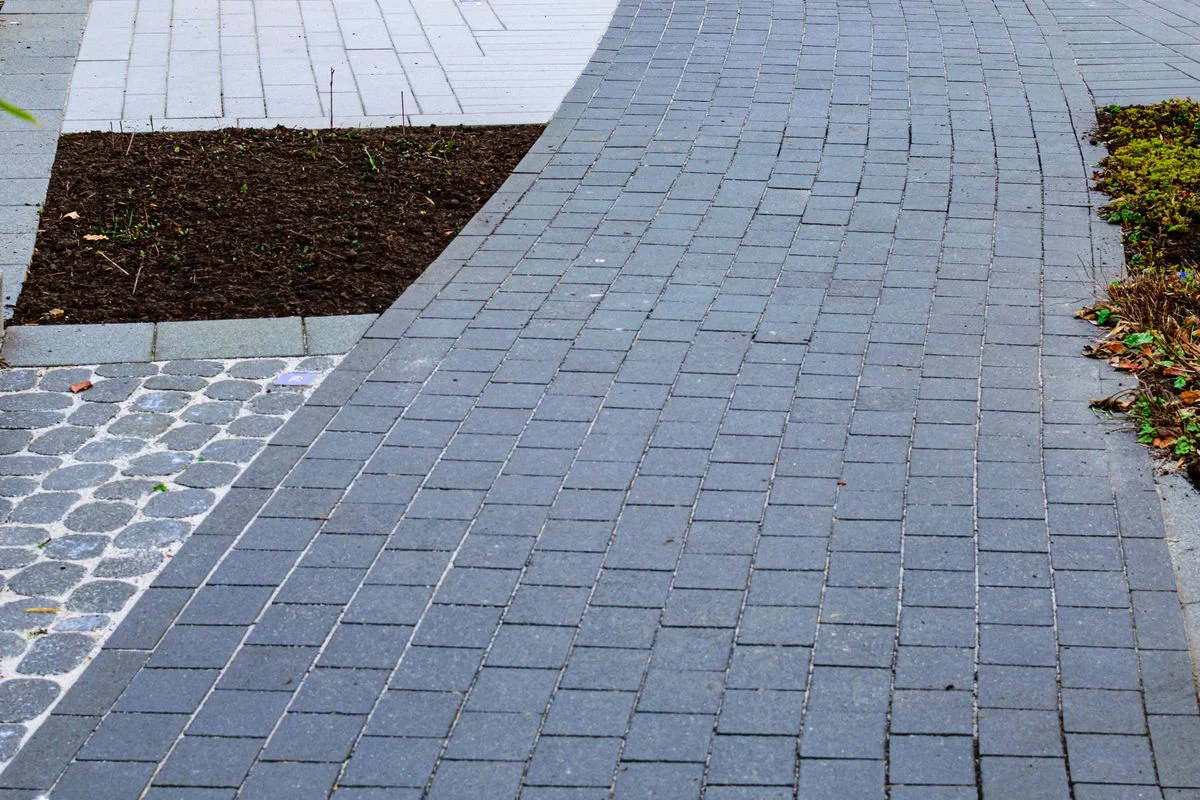
Rental properties are a steady part of our work in Niagara Falls, especially near the tourist areas and in the South End, where a durable, low upkeep surface matters more than a showpiece finish. Interlocking fits that need because a damaged paver can be swapped in minutes. For homeowners also updating indoors, our tile installation in Niagara Falls, bathroom renovation in Niagara Falls, shower tile installation in Niagara Falls and kitchen backsplash in Niagara Falls pages cover those rooms.
Our crews are based in Thorold, and we serve the whole Niagara Region, not just Niagara Falls. That region includes Thorold, Niagara Falls, St. Catharines, Welland, Fort Erie, Grimsby, Lincoln, Niagara-on-the-Lake, Pelham, Port Colborne, Wainfleet and West Lincoln. Homeowners in St. Catharines can read the same local detail on our page about interlocking in St. Catharines.
Why Homeowners in Niagara Falls Hire BGM
The simplest reason is proximity. BGM Construction LTD is based at 5 Swart Ln in Thorold, minutes from Niagara Falls, so we can visit quickly, we know the soils and the drainage patterns on this side of the escarpment, and we are nearby if a question comes up after the job is done.
The second reason is how we quote. Every interlocking quote is written and itemized, with the excavation and base work, the pavers, the edging, the joint sand and any drainage work shown as separate lines. We walk the finished surface with you before the final payment, checking levels, edges, joints and drainage together.
Finally, we build the base as if we will be the ones coming back to fix it. A driveway that looks perfect on day one and settles in year two helps no one. If a section does settle later, it can be lifted and corrected without replacing the whole surface.
Get a Free Quote for Interlocking in Niagara Falls
If you are planning an interlocking driveway, walkway, patio or repair in Niagara Falls, the next step is simple. Call BGM Construction LTD at +1 365-524-1898 or fill in the free quote form on this page. We will measure properly, look at drainage and give you a written, itemized quote, with no obligation to proceed.
Frequently Asked Questions
How long does interlocking last in Niagara Falls?
A well built surface typically lasts 25 years or more. Pavers can move slightly with freeze and thaw and can be reset if they settle, so lifespan depends more on the base and edge restraints than on the paver brand.
How much does interlocking cost per square foot in Niagara Falls?
As a planning guide, most walkways run $28 to $42 per square foot, patios $25 to $45 and driveways $30 to $48, before HST. Your final price comes from a written quote after measuring, because excavation depth, access and drainage change the cost from one property to the next.
Can you repair a sunken area without redoing the whole driveway?
Yes, in most cases. We lift the sunken pavers, correct the base, reset the pavers level and refill the joints with polymeric sand. A full replacement is only needed when the base has failed across a wide area.
Do interlocking pavers handle road salt?
Yes, concrete pavers are made for salt exposure, and they hold up better than many poured surfaces because salt damage to one unit does not spread. Lighter colours show salt staining less.
When is the best time of year to install interlocking in Niagara Falls?
Late spring through fall is the usual window, once the ground has thawed and dried. We will not build a base on frozen or saturated soil, because that base will settle in spring.
Do I need a permit for interlocking in Niagara Falls?
Most driveway, walkway and patio replacements on private property do not need a building permit, but rules can apply to driveway width, setbacks and work near a property line. We will flag anything that needs a check with the city before work starts.
How long does an interlocking project take?
A walkway or small patio usually takes two to three days, and a driveway usually takes four to seven days, depending on size, excavation and weather.
Can interlocking go over my existing concrete?
Only if the existing concrete is sound, level and well drained. If the concrete is cracked through, heaved or badly settled, it should be removed and a proper base built instead.