
Walk into a tile showroom and the biggest tiles on the wall can stop you in your tracks. One tile can cover most of a bathroom wall, and a floor can look almost seamless, with only a few thin grout lines breaking up the pattern. That is the appeal of large format tile, and it is also the reason it needs more care than a small tile. This guide explains what large format tiles are, which sizes count, where they work best, and what to watch out for before you choose them.
Large format tile is not a material, a brand, or a single look. It is a size category. Porcelain, ceramic, and stone can all be made in large formats, and the same size can look very different in a marble look porcelain, a plain matte tile, or a natural stone slab. Size changes how a room feels, how much grout you will see, how the floor is prepared, and how the tile must be handled on site. Understanding size first makes every other choice easier.
What Is Considered a Large Format Tile?
In this guide, a large format tile is any tile with at least one edge that is 60 cm, or 24 inches, long. The test is the longest edge, not the total area of the tile. A tile that measures 24 inches by 48 inches qualifies, and so does a plank that measures 8 inches by 48 inches, because its long edge reaches the threshold. A square tile that measures 24 inches by 24 inches also qualifies, exactly at the threshold.
That edge based rule matters because a long, narrow tile behaves like a large tile on site even when it is not very wide. It needs a flat surface, it can show lippage if one end sits higher than the next tile, and it usually needs two people to lift and set it safely. A small square tile can hide a slightly uneven floor in its many grout joints. A large tile cannot. The fewer the joints, the more the surface underneath has to do the work.
Common Large Format Tile Sizes
The most common large format sizes are squares and rectangles that start at 24 inches on one side and grow from there. Planks are the other main family, with a long side that is often 36 inches or 48 inches. The table below covers the sizes you are most likely to see in a Canadian tile shop, in both inches and centimetres, so you can compare a label in either unit.
| Tile size in inches | Tile size in centimetres | Shape | Common use |
|---|---|---|---|
| 24 by 24 | 60 by 60 | Square | Floors and large walls |
| 24 by 48 | 60 by 120 | Rectangle | Floors, feature walls, showers |
| 12 by 48 | 30 by 120 | Plank | Wood look floors |
| 8 by 48 | 20 by 120 | Plank | Wood look floors and walls |
| 32 by 32 | 80 by 80 | Square | Open plan floors |
| 36 by 36 | 90 by 90 | Square | Large rooms and entries |
| 48 by 48 | 120 by 120 | Square | Very large, open spaces |
Sizes larger than those in the table exist, and they move into the world of large slabs. A slab can measure 48 inches by 96 inches, or even larger, and it is often used as a full wall panel or a countertop surface rather than as a floor tile. Slabs give the most seamless look of all, but they need specialist handling, transport, and cutting equipment, and they are priced and installed differently from boxed tile. For most homes, the sizes in the table are the practical large format range.
How Large Format Changes the Look of a Room
The main visual difference is grout. A floor laid with 12 inch tiles has a grid of grout lines every foot. A floor laid with 24 inch by 48 inch tiles has far fewer lines, so the eye reads one continuous surface instead of many small pieces. That is why large format tile is popular in open plan living areas, where a continuous floor helps a kitchen, dining area, and living room feel like one space rather than three separate rooms.
Pattern also reads differently at large scale. A stone look tile can show a full veined pattern across one tile, instead of cutting the pattern into small pieces. A wood look plank can show a long grain run that feels closer to real timber. On the other hand, a bold pattern can dominate a small room if it is repeated in very large pieces, so it is worth viewing a large sample, or several tiles together, before you commit. One tile in a showroom rarely tells the whole story.
Large Format Tile Materials
Size and material are separate choices, and both matter. The material decides how hard the tile is, how much water it absorbs, how it handles a dropped pan or a wet shower wall, and how much care it will need over its life. The size decides how the surface looks and how demanding the installation will be.
Porcelain large format tile
Porcelain is the most common large format material, and for most floors it is the safest default. True porcelain absorbs 0.5 percent or less of its weight in water, which makes it dense, hard, and suitable for wet areas and for cold climates when it is rated for exterior use. It holds up well to traffic, pets, and grit, and it is available in stone looks, concrete looks, wood looks, and plain colours. Our most durable tile flooring guide explains how porcelain compares with other materials on wear and strength, and our porcelain vs ceramic tile comparison covers the differences in plain language.
Ceramic large format tile
Ceramic large format tile is usually lighter, softer, and less expensive than porcelain, and it is most often used on walls, where wear and water absorption matter less. A large ceramic wall tile can give a bathroom or kitchen a clean, modern look without the weight and cutting difficulty of a large porcelain tile. On floors, ceramic needs a wear rating that suits the traffic in the room, and it is a weaker choice for entries, kitchens, and any floor that will see grit, heavy furniture, or freezing weather.
Natural stone large format tile
Natural stone in large formats, including marble, granite, limestone, and travertine, gives a one of a kind surface, because no two tiles have exactly the same veining or colour. Stone is softer and more porous than porcelain, so it usually needs sealing, and some stones can stain or etch if they are not cared for correctly. Large stone tiles are also heavy and can vary in thickness, which makes flatness and lippage control even more important. Stone is best chosen when you want the real material and you accept the maintenance that comes with it.
Large slabs and panels
Large slabs, sometimes called gauged porcelain panels, are thin, very large sheets of porcelain, often 6 mm thick, that can cover a whole shower wall or a fireplace surround with almost no joints. They look striking, and they reduce grout cleaning to almost nothing, but they are not simply bigger tiles. They need a perfectly flat wall, careful transport, suction handling, and cutting with specialist tools, and a broken slab is an expensive loss. Slabs suit a project where the seamless look is the priority and the budget allows for specialist installation.
Where Large Format Tile Works Best
Large format tile earns its place in rooms where you want a calm, continuous surface and where the substrate can be made flat enough to support it. It is less suited to small, curved, or heavily sloped surfaces, where many small tiles and many joints do a better job of following the shape.
Living areas and floors
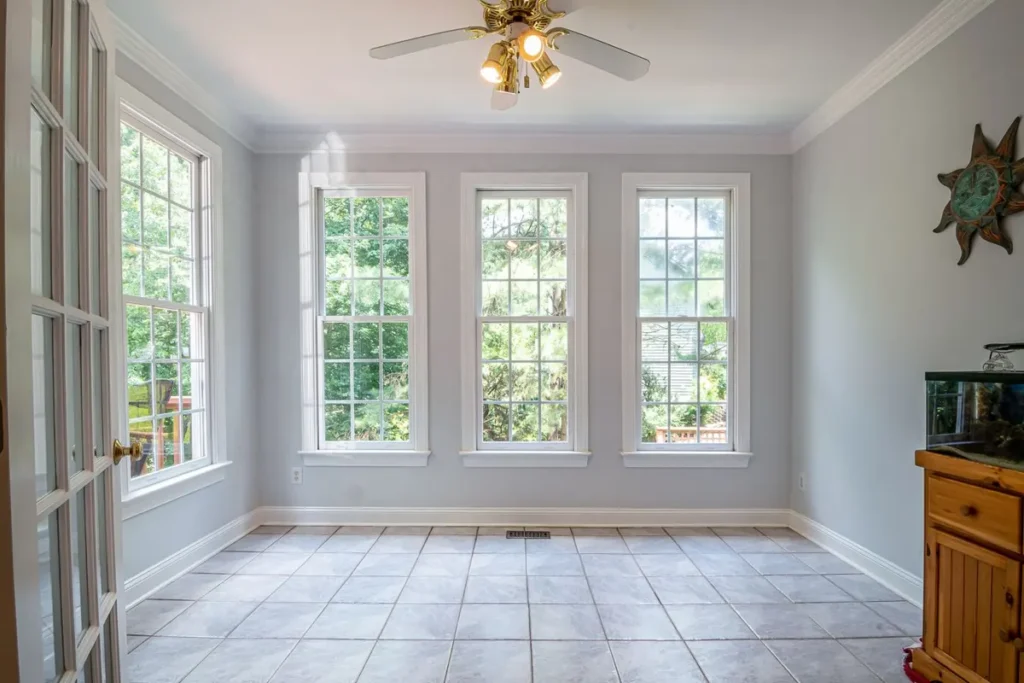
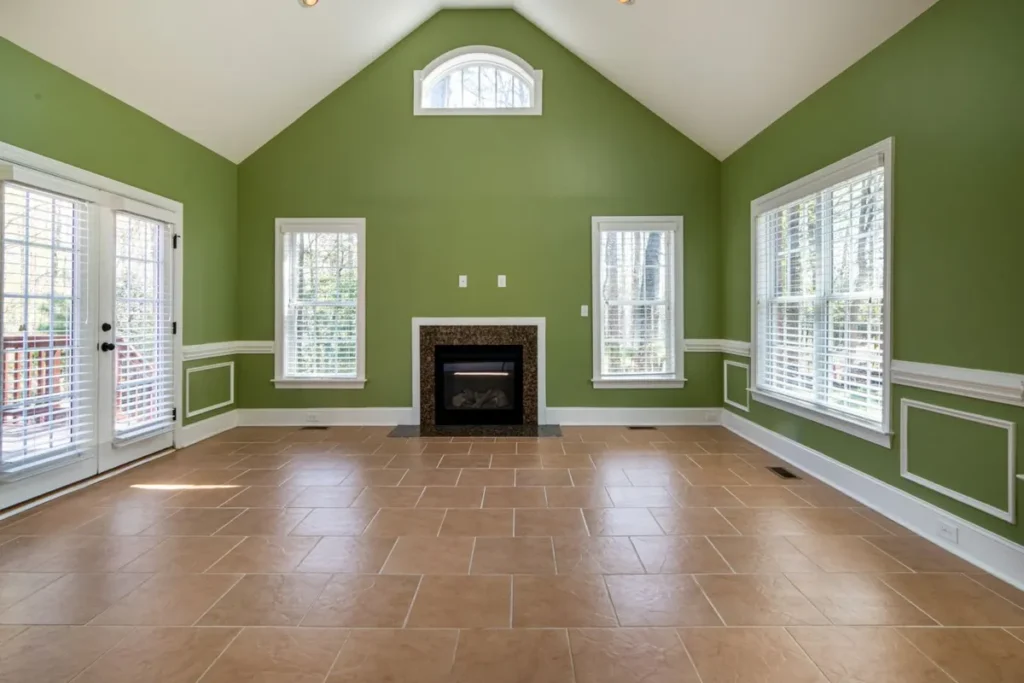
Open plan floors are the classic large format success story. A 24 inch by 48 inch porcelain floor, laid with a narrow grout joint and a matching grout colour, can make a main floor feel larger and calmer, and it is easier to clean than a floor with a grout line every few inches. Entries, hallways, and kitchens benefit in the same way, provided the tile has enough slip resistance for wet shoes and a wear rating that suits the traffic. In a small, cut up room, the same tile may need many cuts around doorways and corners, which can eat into the seamless look and raise waste, so room shape matters as much as room size.
Walls and feature walls
On walls, large format tile gives a modern, hotel style finish with far fewer joints to clean. A fireplace surround, a full height bathroom wall, or a kitchen feature wall can be covered with only a few pieces, which lets the pattern do the talking. Wall tiles can be lighter than floor tiles, and large wall tiles still need a flat, well prepared wall and a mortar that can hold their weight while it sets. Very large wall pieces may also need temporary support until the mortar cures, which is one reason wall work with large tiles takes longer than it looks.
Showers and bathrooms
Shower walls are an ideal place for large format tile. A 24 inch by 48 inch wall tile can run from floor to ceiling with only a few horizontal joints, which makes the shower feel larger and leaves less grout to clean in a wet area. Shower floors are a different story. A shower floor needs slope toward the drain, and a large, stiff tile cannot bend to follow that slope. For that reason, most shower floors use small tiles, often 2 inch mosaics, while the walls use large format tile. Mixing the two sizes is normal, and it is usually the best way to get both the look and the drainage right.
Kitchens
Kitchens suit large format tile on both floors and backsplashes, for different reasons. On the floor, a large porcelain tile resists dropped items, spills, and chair traffic, and its few grout lines are easier to keep clean than a small tile grid. As a backsplash, a large tile or a slab can run behind the stove and sink with almost no joints, which is practical where grease and water splash. One caution applies in kitchens: a polished large tile can be slippery when wet, so a matte or textured finish is usually the safer floor choice.
Benefits of Large Format Tile
The benefits are easy to see, and they explain why the format keeps growing. Fewer grout lines mean a cleaner look and less grout to seal and scrub. A continuous surface can make a room feel larger, especially in open plan homes. Large tiles also show off stone and wood patterns at full scale, and they can reduce the busy, patchwork feeling that small tiles sometimes give a large room. For a well prepared, flat surface, installation can also be faster per square foot, because each tile covers more area.
Drawbacks of Large Format Tile
Large format tile also has real drawbacks, and they should be priced into the decision, not discovered on site. The tile itself usually costs more per square foot, cutting needs larger and more expensive tools, and waste can be higher because a cut that goes wrong loses a large piece. Handling is harder: large tiles are heavy, awkward, and easier to crack before they are set, especially thin slabs. Lippage is the most visible risk. If the floor is not flat, one edge of a large tile can sit higher than its neighbour, creating a lip that catches feet and light. Our large format tile pros and cons guide weighs these trade offs in more detail before you buy.
Installation Demands at a Glance
Installation is where large format tile succeeds or fails, and the work starts before the first tile is laid. The substrate must be flat within a tight tolerance, often checked with a long straightedge, and any dips or humps must be levelled first. A large format mortar, applied with the right trowel size and with full coverage under the tile, is needed so the tile is fully supported and does not hollow out or crack. Levelling clips help hold neighbouring tiles at the same height while the mortar sets. Cutting needs a large wet saw or a rail system, and large pieces need suction cups and two sets of hands. This is an overview only. For the full method, see our large format tile installation tips and our guide to how to cut large format tile.
A short note on rectified tile
Rectified tile is tile whose edges have been ground after firing so that every tile is almost exactly the same size, with a sharp, square edge. That precision allows narrower grout joints and a cleaner large format look, but it does not remove the need for a flat substrate. Rectified edges also show lippage more clearly, because there is no rounded edge to soften a height difference.
Watch: Large Format Tiles Explained
The video below, Everything You Need To Know About Large Format Tiles by Sanctified Homes and Construction, gives a useful visual tour of large format tile, including how the size looks in a real room and what to consider before you choose it.
Large Format Tile Work Across the Whole Niagara Region
BGM Construction installs large format tile across the whole Niagara Region, including Thorold, Niagara Falls, St. Catharines, Welland, Fort Erie, Grimsby, Lincoln, Niagara-on-the-Lake, Pelham, Port Colborne, Wainfleet, and West Lincoln. Call +1 365-524-1898 or use the contact page to talk through your room, your tile choice, and whether your floor or wall is ready for large format tile.
Frequently Asked Questions
What is considered a large format tile?
A large format tile is any tile with at least one edge that is 60 cm, or 24 inches, long. The longest edge is the test, so a 24 inch by 24 inch square, a 24 inch by 48 inch rectangle, and an 8 inch by 48 inch plank all count as large format.
Is 24×24 tile considered a large format?
Yes. A 24 inch by 24 inch tile sits exactly at the threshold used in this guide, because its edges are 60 cm, or 24 inches, long. It will look and behave like a large format tile, with fewer grout lines and a greater need for a flat substrate than a small tile.
Are large format tiles out of style?
No. Large format tile remains a current choice for modern and classic homes alike, because its clean, continuous look suits open plan floors, large bathrooms, and feature walls. What changes over time is the pattern and finish, not the format itself. A plain stone look or a soft matte finish ages better than a very bold pattern.
What are the disadvantages of large format tiles?
The main disadvantages are higher tile and installation cost, heavier and more fragile handling, and a strict need for a flat substrate. Lippage is a real risk on an uneven floor, cutting needs larger tools, and a failed cut wastes a large piece. Large tiles are also a poor fit for shower floors, which need slope, and for small or curved surfaces, where small tiles follow the shape better.









2 Responses